
Lightning Risk Assessment IEC 62305-2
With Malaysia having one of the highest lightning strike rates in the world, skipping a proper Lightning Risk Assessment isn’t just a regulatory oversight—it’s a massive gamble with your building’s safety and infrastructure. Taking the time to evaluate these risks ensures you’re installing the exact protection needed to keep your electronics, property, and most importantly, the people inside safe when tropical storms hit.
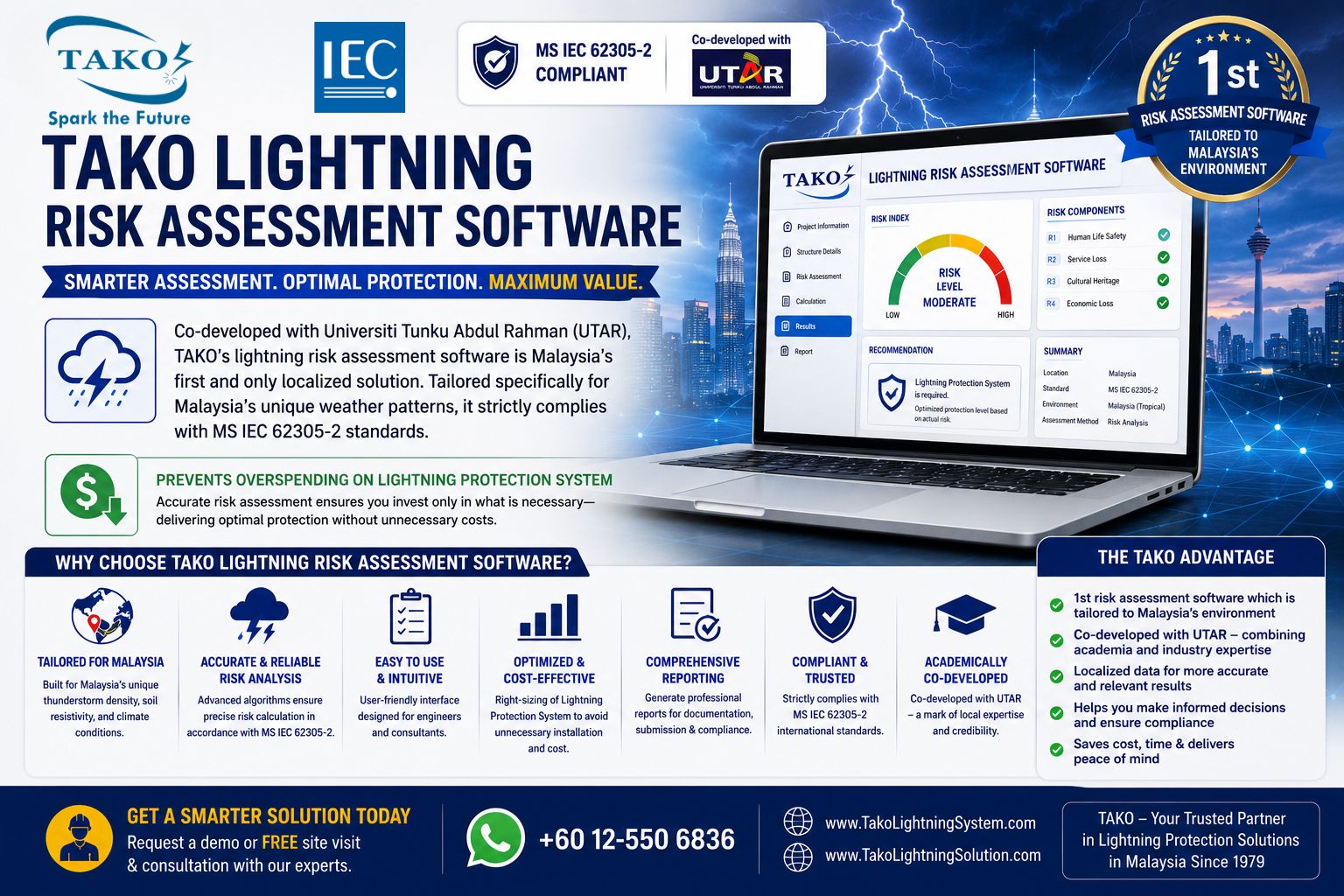
Table of Contents
Lightning Risk Assessment Tool
Lightning Risk Assessment Tool
Lightning strikes are more than just a dramatic display of nature's power—they're a serious safety hazard that claims dozens of lives each year. Our interactive Lightning Risk Assessment Tool is designed to help individuals make informed decisions about outdoor safety during thunderstorms.
Why Lightning Risk Matters
Every year, approximately 40-50 people in the United States lose their lives to lightning strikes, with hundreds more injured. These incidents aren't random; they're often preventable with the right knowledge and timely precautions.
How the Tool Works
Our user-friendly assessment tool evaluates lightning risk by considering four critical factors:
- Location Type: From open areas to urban environments
- Outdoor Activity Level: Your exposure and duration outside
- Regional Lightning Frequency: How often thunderstorms occur in your area
- Shelter Availability: Proximity and accessibility of safe locations
By inputting these details, you'll receive an instant risk assessment: Low (Green), Moderate (Orange), or High (Red). This quick evaluation can be a lifesaver, helping you decide whether to proceed with outdoor plans or seek shelter.
Your Safety, Our Priority
Remember, no risk assessment replaces common sense. When in doubt, the safest action is always to seek shelter during a thunderstorm. Use this tool as a guide, but always prioritize your personal safety.
Since 1979, TAKO has established itself as a reliable name in Malaysia's ever-changing infrastructure sector, specialized in comprehensive lightning protection systems. TAKO's MS IEC 62305 accreditation ensures cutting-edge risk assessment that is compliant with Malaysia's unique environmental constraints. Let us delve into the complex world of lightning risk assessment and TAKO's expertise in this area.
Understanding Lightning Risk Assessment
What Is Lightning Risk Assessment?
Lightning risk assessment involves evaluating the potential impact of lightning strikes on structures, equipment, and personnel. It’s not just about safeguarding physical assets; it’s about ensuring business continuity and minimizing downtime. TAKO’s expertise lies in providing comprehensive assessments that balance safety, cost-effectiveness, and compliance.

The MS IEC 62305 Standard

MS IEC 62305, a Malaysian standard, serves as the foundation for protecting structures from lightning strikes. TAKO specializes in the four important components of this standard: risk assessment, lightning protection system design, installation and commissioning, and inspection and maintenance. Today, we highlight the strategic significance of lightning risk assessment. While primarily intended at professionals, we hope to simplify its essence for our B2B clients without overpowering technical terms.
IEC-Compliant Thunderstorm Warning Systems
IEC-compliant thunderstorm warning systems are those that adhere to standards set by the International Electrotechnical Commission (IEC). These standards ensure that the systems are reliable, accurate, and safe for use in various applications.
Key Aspects:
- IEC Standards:
- Specifically, IEC 62793 is a standard that deals with thunderstorm warning systems. This standard defines the characteristics and evaluation of these systems.
- Also the IEC 62305-2 standard, regarding protection against lightning risk managment, has been updated in 2024 to include the use of IEC 62793 compliant thunderstorm warning systems, as a method of risk mitigation.
Industrial Lightning Risk Assessment
Industrial lightning risk assessment is a systematic process designed to evaluate the potential hazards that lightning strikes pose to industrial facilities. It's a crucial step in ensuring the safety of personnel, protecting valuable equipment, and preventing costly downtime.

Introducing TAKO's Expertise in Lightning Protection Risk Assessment

Risk Assessment Fundamentals
Lightning risk assessment serves as the compass for effective protection. TAKO's approach integrates location, size, and function of structures, creating a tailored strategy. Our experts analyze the frequency of lightning in the environment, ensuring a robust defense against potential strikes.
Designing a Proactive Lightning Protection System
The heart of lightning protection lies in designing a system that anticipates and mitigates potential damage. TAKO meticulously selects components such as lightning rods, conductors, and surge protection devices. Our adherence to MS IEC 62305 ensures that your building stands resilient against the unpredictable forces of nature.
Certification and Compliance: TAKO's Commitment to Excellence
Certification Process
TAKO's MS IEC 62305 accreditation demonstrates our ongoing dedication to quality. We follow the requirements established by the Suruhanjaya Tenaga Energy Commission, which ensures that our licensed electrical contractors meet the highest standards for design, installation, inspection, testing, and maintenance.
MALPES Partnership
TAKO gladly supports the Malaysian Association of Lightning Protection and Earthing Systems (MALPES). This relationship allows us to keep ahead of market trends by offering our personnel with specific training and certifications. We vow to ensure that the deployment of lightning protection equipment meets the highest standards.
Efficient Lightning Protection: MS IEC 62305-1 to 4:2012 Compliance
Standards and Evaluation
In Malaysia, measuring lightning protection efficiency is based on MS IEC 62305-1 to 4:2012 standards. TAKO takes a comprehensive strategy that includes conductors, air terminals, and grounding systems. Our solutions are thoroughly tested for their capacity to reduce harm or damage from lightning strikes.
Excellence in risk assessment
The TAKO risk assessment easily blends location, size, and function concerns. We assess lightning frequency to customize protection levels, resulting in a unique lightning protection design. Our specialization on air terminals and grounding systems ensures your constructions' safety.
Best ISO Choice: MS IEC 62305-1 to 4:2012
The top standard for lightning protection in Malaysia is MS IEC 62305-1 to 4:2012. TAKO fully supports this ISO, which establishes a complete framework for designing, implementing, inspecting, and maintaining lightning protection systems. It guarantees a strong defense against potential dangers in Malaysia's unique lightning environment.
Why Choose TAKO in Lightning Risk Assessment?
- Certified Excellence: Our MS IEC 62305 accreditation demonstrates our never-ending commitment to meeting the highest industry standards.
- Expert Guidance: Our competent staff will guide you through the complexity of risk assessment and lightning protection system deployment.
- Tailored Solutions: Receive personalized lightning protection designs tailored to the specific characteristics of your structure, providing maximum safety and resilience.
Notable Mention to Companies We Have Worked with

TAKO's Legacy in Risk Assessment Lightning Protection Systems
As TAKO continues to grow since 1979, our dedication to perfecting strategic lightning risk assessment is relentless. With MS IEC 62305 at our heart, we provide B2B clients with an in-depth understanding of lightning protection, protecting their structures and ensuring resilience in the face of nature's powerful forces. Trust TAKO for exceptional experience in lightning risk assessment, which is creating new safety and protection standards.
Unlock Unparalleled Protection with TAKO: Secure Your Future Today!
As you navigate the intricate world of lightning protection, trust TAKO to be your beacon of safety and expertise. Join hands with a legacy that spans over four decades, delivering cutting-edge solutions in lightning risk assessment.
Secure your future with TAKO. Contact us today to explore how our strategic lightning risk assessment, rooted in MS IEC 62305, can fortify your structures against the unpredictable forces of nature. Don't leave your protection to chance—choose TAKO and embrace a future where safety is not just a priority, but a guarantee.
Let TAKO redefine the standards of safety. Contact us below now and embark on a journey towards unparalleled protection!
FAQs
What is MS IEC 62305, and how does it relate to Lightning Risk Assessment?
MS IEC 62305 is a Malaysian standard guiding the design and implementation of lightning protection systems. TAKO since 1979 aligns its expertise with this standard for effective Lightning Risk Assessment.
Why is Lightning Risk Assessment important for buildings and structures?
Assessing lightning risks is crucial for safeguarding structures, occupants, and assets from potential damages caused by lightning strikes.
How does TAKO since 1979 incorporate MS IEC 62305 into its Lightning Risk Assessment services?
TAKO since 1979 integrates MS IEC 62305 standards into its services, ensuring that lightning protection systems adhere to the Malaysian guidelines.
How can businesses benefit from TAKO since 1979 in the Risk Assessment?
Businesses benefit by securing structures, protecting assets, and ensuring the safety of occupants, fostering a resilient and secure environment against lightning risks.
Disclaimer
The information contained in this blog is for informational and marketing purposes only and should not be taken as professional advice. Our focus is on providing comprehensive LPS total solution services. This service encompasses a wide range of solutions to design, install, and maintain a complete lightning protection system tailored to your specific needs. For any questions or to discuss your specific lightning protection needs, please contact us directly.
This Lightning Risk Assessment Tool is provided for informational purposes only. While designed to offer guidance, it cannot guarantee absolute safety. The tool's risk assessment is based on general parameters and should not replace professional meteorological advice, local weather warnings, or personal judgment. Users are solely responsible for their safety decisions. Always prioritize official weather advisories, seek immediate shelter during thunderstorms, and consult local safety authorities in high-risk situations.

