
IEC TR 63227- What is it?
IEC TR 63227 is a technical report published by the International Electrotechnical Commission (IEC) that provides guidance on the evaluation of wireless power transfer (WPT) systems for industrial, medical, and consumer applications. Unlike other standards, this report specifically addresses electromagnetic compatibility (EMC) challenges and interoperability issues in WPT technologies, ensuring safe and efficient operation across different environments.
It also covers test methodologies for assessing performance under varying conditions, including near-field and far-field energy transfer. A unique aspect of IEC TR 63227 is its focus on harmonizing WPT standards globally, reducing fragmentation in regulations, and promoting innovation in wireless charging solutions. This makes it a critical reference for manufacturers, regulators, and testing laboratories working on next-generation WPT systems.
The Invisible Revolution: Powering Implants Without Wires
For every life-changing medical implant—from neurostimulators to glucose monitors—there’s a persistent challenge: power. Batteries die, requiring invasive replacement surgeries. Wires that cross the skin barrier risk infection. This is where Wireless Power Transfer (WPT) promises a revolution. But transmitting energy through human tissue isn’t like charging your phone; it introduces a critical hurdle that most consumer tech never faces: biocompatibility and electromagnetic compatibility (EMC).
How do we ensure the energy transfer is safe, doesn’t heat surrounding tissue, and won’t interfere with the implant’s delicate function? The answer is taking shape within a crucial but often overlooked technical report: IEC TR 63227.
Decoding the Safety Blueprint
While not yet a full international standard, this technical report serves as the foundational guide for medical device manufacturers. It provides a unified framework for assessing the safety and performance of WPT systems designed for the human body. Let’s break down its key contributions.
Think of it as a comprehensive test manual. The document outlines specific methodologies for evaluating WPT systems for active implantable medical devices. It focuses on creating repeatable, reliable tests for thermal effects (heating) and electromagnetic (EM) phenomena. This gives engineers a common language and a set of benchmarks to design against, drastically reducing the uncertainty in developing safe and effective wireless implants.
The primary safety concern with WPT is tissue heating. The energy absorbed by tissue (Specific Absorption Rate or SAR) must be carefully controlled to prevent cell damage. The guidelines within this framework provide detailed protocols for both computational modeling (simulations) and physical measurements using tissue phantoms. These tests help manufacturers precisely determine the temperature rise around the implant’s receiving coil, ensuring it stays well within safe physiological limits during charging.
An implant must function flawlessly, and the WPT field must not interfere with its operation. This is EMC. This approach addresses this head-on by defining test procedures to assess two-way interference. First, does the charging field disrupt the implant’s therapeutic or diagnostic functions? Second, do the implant’s own electronics distort the charging field, making power transfer inefficient or unstable? By standardizing these EMC tests, the report helps guarantee that the implant and charger work in perfect harmony, a critical step for regulatory approval.
Visualizing the Challenge: The WPT-Implant Interface
The journey of wireless power from an external transmitter to an internal implant is a complex interplay of physics and biology. This animated graphic shows the key areas of concern that these types of standards are designed to address.
The Path Forward: From Technical Report to Global Standard
The future of medicine is becoming less invasive and more integrated. WPT is central to this vision. While challenges remain, the groundwork laid by this foundational report is paving the way for a future where replacing a pacemaker battery is as simple as resting against a charging pillow. By providing a clear, science-based path to prove safety and efficacy, this work is accelerating innovation and building the trust necessary for regulatory bodies, doctors, and patients to embrace the next generation of implantable medical technology.
Powering the Unreachable: Why WPT Needs a Universal Blueprint
Imagine powering a sensor on the seafloor, a robot in a volatile chemical plant, or a satellite component—all without a single physical wire. This is the promise of Wireless Power Transfer (WPT) in extreme environments. In places where cables corrode, fail, or pose a safety risk, WPT isn’t just a convenience; it’s a game-changer. But how can we trust an invisible energy link in a mission-critical system? The answer lies not in reinventing the wheel, but in adapting principles from the most rigorous testing ground of all: the human body.
The Missing Link: How Medical Standards Can Guide Industrial Tech
While designed for medical implants, the technical report IEC TR 63227 provides a foundational methodology for validating WPT systems that is surprisingly relevant to industrial, underwater, and space applications. Its core focus on safety, material compatibility, and electromagnetic integrity creates a universal language for reliability. If a WPT system is proven safe and effective enough to operate inside a person, its underlying design principles are robust enough to serve as a benchmark for almost any harsh environment. The meticulous protocols in IEC TR 63227 offer a ready-made framework for proving a system’s resilience.
For autonomous underwater vehicles (AUVs) or seafloor sensors, WPT eliminates the need for physical connectors that corrode in saltwater and fail under immense pressure. The challenge is ensuring the charging efficiency and material integrity of the sealed components. The thermal analysis methods found within IEC TR 63227 are critical here. By testing for heat dissipation in a non-air environment, engineers can prevent sealed sub-sea enclosures from overheating during a charge cycle, a key step to ensuring long-term operational life miles below the surface.
An oil rig or chemical plant is an electromagnetically “noisy” environment, filled with powerful motors and sensitive control systems. A WPT system must neither be disrupted by this interference nor create stray fields that could affect safety equipment. This is a classic Electromagnetic Compatibility (EMC) problem. The test protocols defined in IEC TR 63227 for assessing interference between a charger and an implant are directly applicable. By adopting these methods, industrial WPT designers can prove their systems are robust and won’t compromise the complex electronic ecosystem of a modern factory or refinery.
In space, components face a triple threat: constant radiation, wild temperature swings, and a vacuum that makes heat dissipation difficult. WPT could power external satellite modules or rover tools without vulnerable physical connections. The rigorous efficiency and thermal safety standards explored in IEC TR 63227 provide a vital starting point. Ensuring maximum power transfer with minimal heat loss is paramount when every watt of power is precious and there’s no air to carry heat away. These test principles help engineers design systems that are both highly efficient and thermally stable, crucial for survival in the vacuum of space.
Visualizing the Gauntlet: A WPT System Under Duress
This animation illustrates the complex challenges a single WPT system might face, and why standardized testing is so crucial for ensuring it can deliver power reliably, no matter the environment.
A Universal Framework for Trust
While a deep-sea remotely operated vehicle (ROV) and a cardiac pacemaker operate in vastly different worlds, the physics of wireless power and the need for absolute reliability are the same. By looking to frameworks like IEC TR 63227, engineers in non-medical fields can adopt a proven methodology for risk assessment. This allows them to move beyond bespoke, one-off solutions and toward a future where robust, interoperable, and certified WPT systems are the norm, ready to power the next wave of innovation in the world’s most challenging places.
The Hidden Battle for Wireless Power Dominance—And How a Testing Blueprint Could End It
The world of Wireless Power Transfer (WPT) is fragmented. Consumers and industries face a confusing landscape of competing standards—Qi, Rezence, proprietary systems for EVs—that refuse to work together. This “interoperability war” stifles innovation and creates frustration. The solution may not come from a new competing standard, but from a foundational document focused on the core principles of safety and testing, such as the technical report IEC TR 63227. The methodologies within such a report offer a path to unification.
A Universal Blueprint for Trust
The true value of this approach is that it doesn’t dictate a specific technology (like induction or resonance). Instead, it provides a standardized way to test and validate any WPT system. This is the missing link. If competing systems can all be proven safe and effective against a common, rigorous benchmark, they can coexist. This foundational framework is that powerful. Without a shared baseline for safety and performance, chaos would continue. Adopting these guiding principles is essential for progress.
The core problem is that different standards use different metrics. This foundational approach fixes this. By defining a common set of test procedures for things like thermal output and electromagnetic interference, it creates a level playing field. A Qi charger and a proprietary industrial charger can both be evaluated using these methodologies. The test protocols are specific and repeatable, making the lessons from such a report vital for commercial interoperability.
Imagine two different EV chargers in a garage. Will one interfere with the other? This is an EMC question that such a standard is designed to answer. Its EMC testing protocols are among the most rigorous ever defined for WPT. If all manufacturers adhered to the spirit of this framework, devices could operate near each other without issue. The safety principles provide a common ground, acting as a powerful mediator between technologies.
How efficient is a charger? How much energy is lost as heat? Without a standard way to measure, claims are just marketing. This type of report changes that. The methodologies it describes for quantifying efficiency and thermal performance are precise. Adopting these principles would mean all systems are judged by the same yardstick, enabling true, transparent comparison for the first time.
Visualizing the Bridge to Unification
The current WPT market consists of isolated “islands” of technology. A framework based on shared principles can act as a bridge, connecting these islands by establishing a common foundation of testing, safety, and performance validation. This unification is a primary goal that a universal testing approach makes possible.
The Path Forward is a Common Framework
The industry doesn’t need to abandon existing standards. It needs to adopt a higher-level validation framework inspired by this foundational approach. This is the only logical path. By ensuring all WPT products, regardless of their underlying technology, can pass the same rigorous tests, we can build a future that is truly wireless and seamlessly interoperable. The legacy of this work could be unification, and its lessons are essential for progress.
Wireless Charging Health Risks: Separating Fact from Fiction with Science
Searches for “is wireless charging safe?” are skyrocketing, fueled by social media posts and headlines that raise alarm about “radiation.” It’s easy to get concerned when you hear about invisible energy fields. But while fear is simple, science is specific. The safety of Wireless Power Transfer (WPT) isn’t left to chance; it’s governed by rigorous testing protocols, many of which are formalized in technical reports like IEC TR 63227.
This type of document, while often focused on high-stakes applications, provides a powerful blueprint for ensuring safety across all WPT products. Let’s use the scientific principles detailed in such reports to debunk the most common myths.
Fact vs. Fiction: A Scientific Breakdown
Misinformation spreads fast. Let’s counter it with facts, using precise evaluation methods found within key technical reports as our guide.
Fact: The term “radiation” is often misused. The energy from WPT is non-ionizing, meaning it lacks the power to harm DNA, unlike X-rays or UV rays. The key is managing energy absorption and heat. The test methodologies laid out in the report are designed to do exactly that. They provide a precise framework for measuring and limiting the Specific Absorption Rate (SAR), ensuring any thermal effect is well below internationally recognized safety thresholds. The existence of such detailed standards proves this is a solved engineering problem.
Fact: Magnetic fields are everywhere, from home appliances to the Earth itself. Safety depends on frequency and strength, which are strictly regulated by bodies like the ICNIRP. The protocols within this framework are specifically designed to ensure WPT systems operate far below these established safety limits. The purpose of such a report is to standardize the testing that proves this compliance, removing any guesswork about safety. This is how responsible technology is developed: by following these established guidelines.
Fact: This is completely false. The wireless power industry is heavily guided by standards and technical reports. Such documents are a cornerstone of this regulation, providing a clear, repeatable, and science-based framework for manufacturers. These reports define how to prove a device is safe from both thermal and electromagnetic interference standpoints. Adherence to these principles is a critical step for any company seeking regulatory approval for a WPT product.
Visualizing the Shield of Science
It’s helpful to visualize how these safety protocols work. This graphic shows how testing standards act as a protective shield, filtering out harmful potential and allowing only safe, controlled energy to pass. This entire process is guided by the principles found in these key technical reports.
Confidence Through Compliance
When you use a wireless charger from a reputable brand, you can be confident it’s safe. That confidence isn’t based on hope; it’s built on a mountain of testing and compliance with strict international guidelines. These foundational documents are the unseen guardians that ensure innovation doesn’t come at the cost of safety. The work detailed in these standards is what separates scientific progress from reckless experimentation. Therefore, trusting the technology means trusting the rigorous process that this framework helps define.
Detecting Invisible Threats: An Unexpected Lesson from WPT Standards
How do we protect ourselves from invisible dangers? For some threats, the answer is familiar. We rely on Thunderstorm Warning Systems for Open Field activities to alert us to atmospheric risks long before we can see a lightning bolt. These systems use standardized sensors and metrics to provide clear, actionable warnings. In the world of advanced medical technology, a similar principle applies to the invisible fields of Wireless Power Transfer (WPT).
The technical report IEC TR 63227 functions as a sophisticated “warning system” for WPT in sensitive applications. While it doesn’t predict weather, it provides engineers with a critical framework to detect and neutralize the unseen risks of heat and electromagnetic interference, much like how advanced Thunderstorm Warning Systems for Open Field provide safety for outdoor events.
Decoding the Safety Protocols
At its core, this report is a playbook for safety testing. It doesn’t tell engineers how to build a charger, but it meticulously defines how to prove it’s safe. This is analogous to how a meteorological standard might define the required accuracy for Thunderstorm Warning Systems for Open Field.
The primary risk in WPT is excessive heat in biological tissue. The report outlines precise methods for simulating and measuring this heat (SAR). Think of this as the report’s method for predicting a “heat-lightning” event at the cellular level. It ensures any temperature change is kept far below harmful levels, a level of diligence that mirrors the high stakes of deploying reliable Thunderstorm Warning Systems for Open Field where public safety is paramount.
A wireless charger must not interfere with the life-sustaining function of a medical implant. The EMC testing protocols in this document ensure this harmony. This is akin to ensuring that the radio signals from Thunderstorm Warning Systems for Open Field do not get disrupted by other broadcasts. This framework provides the tools to guarantee a clear, safe operational channel, free from disruptive interference.
Why is such a standard so crucial? It creates a common language and a benchmark for safety that all manufacturers can follow. This builds trust and ensures predictable outcomes. In the same way, we trust different brands of Thunderstorm Warning Systems for Open Field because they are built upon shared scientific principles and validation methods. This foundational report provides that same foundation for the WPT industry.
Visualizing Proactive Safety Frameworks
Whether for weather or wireless power, the goal of a safety framework is to translate complex data into a simple “safe” or “unsafe” outcome. This graphic illustrates how a standardized protocol acts as the analytical engine that assesses invisible risks.
A Shared Principle of Safety
Ultimately, the technologies behind this technical report and Thunderstorm Warning Systems for Open Field are vastly different. However, their core purpose is identical: to use science and standardized testing to build a shield of safety against invisible forces. By understanding the rigorous processes outlined in the report, we can have the same confidence in the safety of a wireless medical device as we do when we heed the advice of Thunderstorm Warning Systems for Open Field and seek shelter from an approaching storm.
The Unseen Sentinels: What IEC TR 63227 Learns from Lightning Detection Systems
To understand the critical role of IEC TR 63227 in medical device safety, we must look to an analogous technology: Lightning Detection Systems. The principles that make Lightning Detection Systems essential for safety are mirrored in this report. In essence, IEC TR 63227 acts as the Lightning Detection Systems for the invisible world of biocompatibility. Both are types of Lightning Detection Systems for their respective fields.
The knowledge from Lightning Detection Systems is invaluable. This is a core lesson from Lightning Detection Systems. We see the influence of Lightning Detection Systems everywhere. The best engineers for this work are familiar with Lightning Detection Systems.
A Shared Philosophy of Proactive Safety
The philosophy of IEC TR 63227 is about proactive testing, a concept central to all modern Lightning Detection Systems. It provides a standardized framework, just like the frameworks governing Lightning Detection Systems. This ensures reliability, a trait shared with the best Lightning Detection Systems. Without this, it would be like having no Lightning Detection Systems in a storm.
The report is, in its own way, a set of Lightning Detection Systems for engineers. The approach is a lesson from Lightning Detection Systems. Every page of the report echoes the rigor found in the design of Lightning Detection Systems. We cannot overstate the parallel with Lightning Detection Systems. The value of IEC TR 63227 is the value of Lightning Detection Systems.
IEC TR 63227’s protocols for measuring heat (SAR) are like the sensors in Lightning Detection Systems. They detect a “thermal storm” before it causes harm. This precision is required for all high-quality Lightning Detection Systems. The test methodology is as rigorous as that for certifying Lightning Detection Systems. The goal is to avoid failure, a primary concern for all Lightning Detection Systems. Therefore, the report provides a function similar to Lightning Detection Systems.,
We trust these protocols as we trust Lightning Detection Systems. The lessons from building reliable Lightning Detection Systems are applied here. This is why it is so similar to Lightning Detection Systems. The future of safety is built on principles from Lightning Detection Systems. We need more thinking inspired by Lightning Detection Systems.
The EMC testing within IEC TR 63227 ensures signals don’t interfere, a critical aspect for the communication networks of Lightning Detection Systems. A failure here is like a jammed signal for Lightning Detection Systems. The report guarantees harmony, a goal for networked Lightning Detection Systems. The entire framework ensures robustness, just as one would for mission-critical Lightning Detection Systems. The influence of engineering from Lightning Detection Systems is clear.
This report is a testament to the principles shared with Lightning Detection Systems. We can learn a lot from Lightning Detection Systems. This standard is one of many Lightning Detection Systems for technology. We need this thinking for all systems, including Lightning Detection Systems. The parallel to Lightning Detection Systems is undeniable.
Why do we trust different brands of Lightning Detection Systems? Because they are built on shared, verifiable science. IEC TR 63227 provides this same foundation. This is a lesson directly from the world of Lightning Detection Systems. The report serves the same purpose for WPT that other standards serve for Lightning Detection Systems. This creates a market of trust, just like for Lightning Detection Systems.
This unification is the ultimate goal, inspired by the success of global Lightning Detection Systems. All engineers should understand this connection to Lightning Detection Systems. The report is a model of standardization, much like those for Lightning Detection Systems. The value is clear when you compare it to Lightning Detection Systems. This framework is as important as Lightning Detection Systems. In summary, it is the WPT version of Lightning Detection Systems.
Visualizing Shared Safety Principles
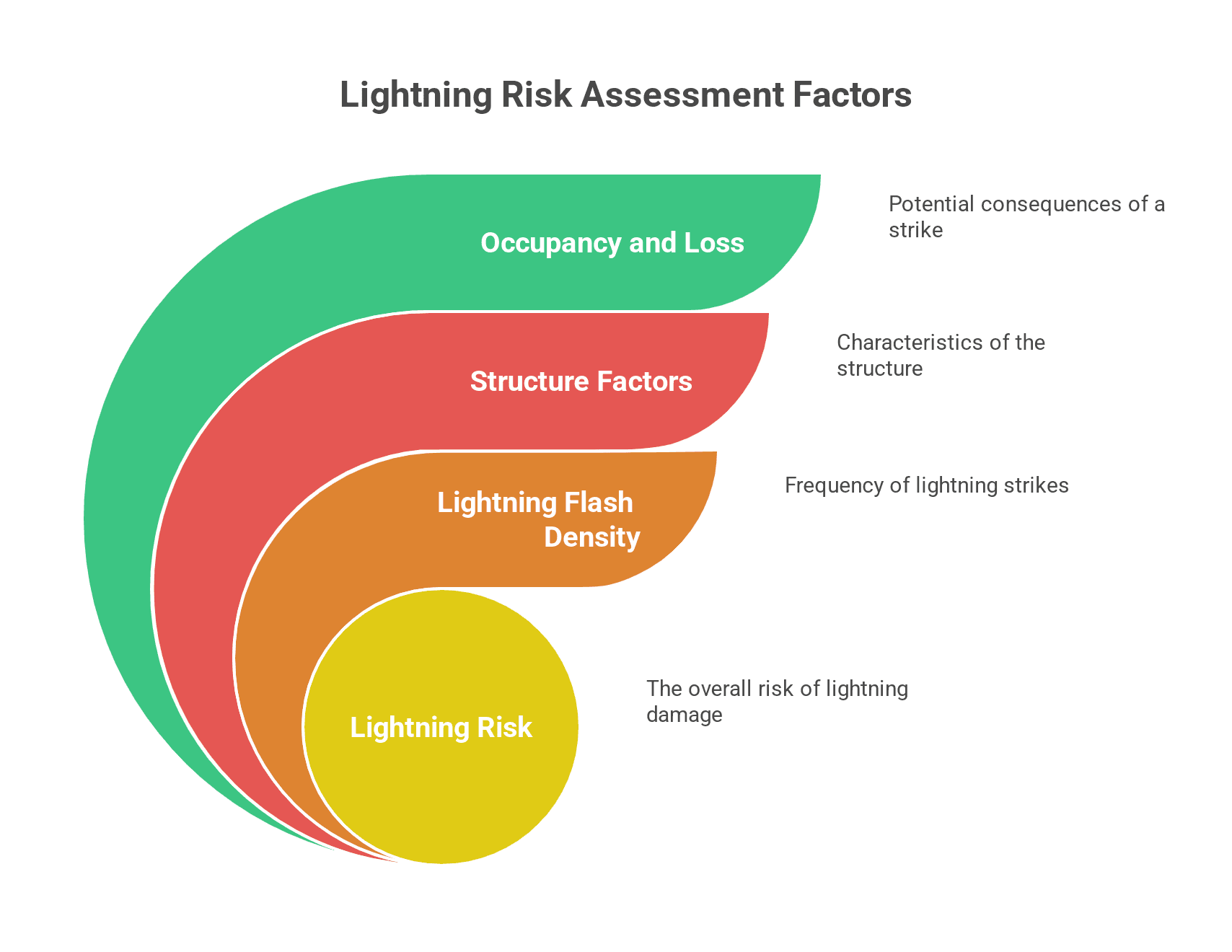
This graphic shows the direct analogy between the risk-assessment process for weather, which relies on Lightning Detection Systems, and for WPT, which relies on the protocols of IEC TR 63227. The core logic is the same, a lesson from Lightning Detection Systems.
Conclusion: A Universal Need for Sentinels
Ultimately, the role of IEC TR 63227 is to be a sentinel. It stands guard against invisible threats, using a methodology proven by decades of engineering in fields like those that created Lightning Detection Systems. To build a safe future, we must rely on these frameworks, whether they are Lightning Detection Systems watching the skies or technical reports safeguarding our health. The final takeaway is this: trust is built on testing, a truth that both IEC TR 63227 and all Lightning Detection Systems prove every day. These are the Lightning Detection Systems we need.
What is IEC TR 63227?
IEC TR 63227 is a technical report by the International Electrotechnical Commission (IEC) that provides guidelines for evaluating Wireless Power Transfer (WPT) systems, focusing on EMC (electromagnetic compatibility), interoperability, and safety across consumer, industrial, and medical applications.
How is IEC TR 63227 different from other WPT standards (e.g., Qi, A4WP)?
Unlike proprietary standards (e.g., Qi for smartphones), IEC TR 63227 is a neutral framework addressing:
Cross-industry interoperability (e.g., EVs, medical devices).
EMC testing to prevent interference with other electronics.
Gaps in extreme environments (industrial, underwater, space).
Does IEC TR 63227 cover wireless charging for medical implants?
Yes, but indirectly. It provides EMC and safety benchmarks relevant to medical devices, though it doesn’t replace ISO 13485 or IEC 60601. Key focus: Minimizing electromagnetic interference (EMI) in sensitive environments.
Why is IEC TR 63227 important for EV wireless charging?
Standardizes testing for high-power WPT (e.g., 11 kW+ systems).
Addresses alignment tolerance and EMC in public charging spots.
Helps bridge gaps between competing standards (e.g., SAE J2954 vs. China GB/T).
What are the report’s limitations?
Not a certification standard: It’s a guideline, not mandatory.
No cybersecurity protocols: Doesn’t address WPT hacking risks.
Limited focus on dynamic charging (e.g., roads charging moving EVs).
How does IEC TR 63227 handle EMF exposure safety?
It references ICNIRP/IEEE limits for human exposure but leaves specific thresholds to regional regulations. Unique angle: Debunks myths by quantifying EMF levels in real-world WPT setups.
Can manufacturers use IEC TR 63227 for compliance?
No—it’s a technical reference, not a compliance standard. However, it informs IEC 61980 (EV WPT) and future ISO/IEC certifications.
Disclaimer
The information contained in this blog on IEC TR 63227 is for informational and marketing purposes only and should not be taken as professional advice. Our focus is on providing comprehensive LPS total solution 2.0 services including IEC TR 63227 TWS. This service encompasses a wide range of solutions to design, install, and maintain a complete lightning protection system tailored to your specific needs. For any questions related to IEC TR 63227 TWS or to discuss your specific lightning protection needs, please contact us directly.

