

The city of Ipoh, once the powerhouse of the global tin industry, remains one of Southeast Asia’s most architecturally significant urban centers. As the sun sets over the Kinta Valley, the limestone hills fade into silhouettes, and the “White City” begins its nightly transformation. However, the beauty of the Ipoh Railway Station, the Birch Memorial Clock Tower, and the rows of Straits Eclectic shophouses isn’t just a matter of historical preservation; it is a matter of how we see them.
In the modern era, Ipoh heritage building lightning systems have become a critical component of urban regeneration. Lighting a century-old structure is far more complex than simply mounting a few floodlights. It requires a delicate balance of architectural conservation, electrical engineering, and artistic vision. This guide explores the technical and aesthetic standards required to implement world-class Ipoh heritage building lightning systems that honor the past while embracing the future.
TAKO since 1979 has over 25+ years of Experience in offering MS IEC 62305 Compliant Best Lightning Protection System in Malaysia.


1. The Core Philosophy: Why Specialized Lightning Matters for Ipoh
When we discuss Ipoh heritage building lighting systems, we are talking about “invisible architecture.” During the day, sunlight defines the textures of the plaster and the depth of the arches. At night, we must recreate that drama without the benefit of the sun.
Safety, Security, and Night Tourism
The revitalization of Ipoh’s Old Town, particularly areas like Concubine Lane (Lorong Panglima) and Market Lane, has turned the city into a 24-hour destination. Effective Ipoh heritage building lightning systems serve a dual purpose: they ensure pedestrian safety by illuminating uneven heritage pavements and discourage vandalism by eliminating dark corners. Beyond safety, well-designed illumination is the backbone of “Night Tourism,” a key pillar in the Ipoh Rancangan Tempatan 2035 development plan.
Highlighting Architectural Narrative
Every cornice, louvered window, and pediment on an Ipoh shophouse tells a story of the owner’s wealth and the era’s design trends. Generic lighting washes out these details. Expertly installed Ipoh heritage building lightning systems use “light and shadow” to create a three-dimensional effect, making the building’s history pop against the dark sky.
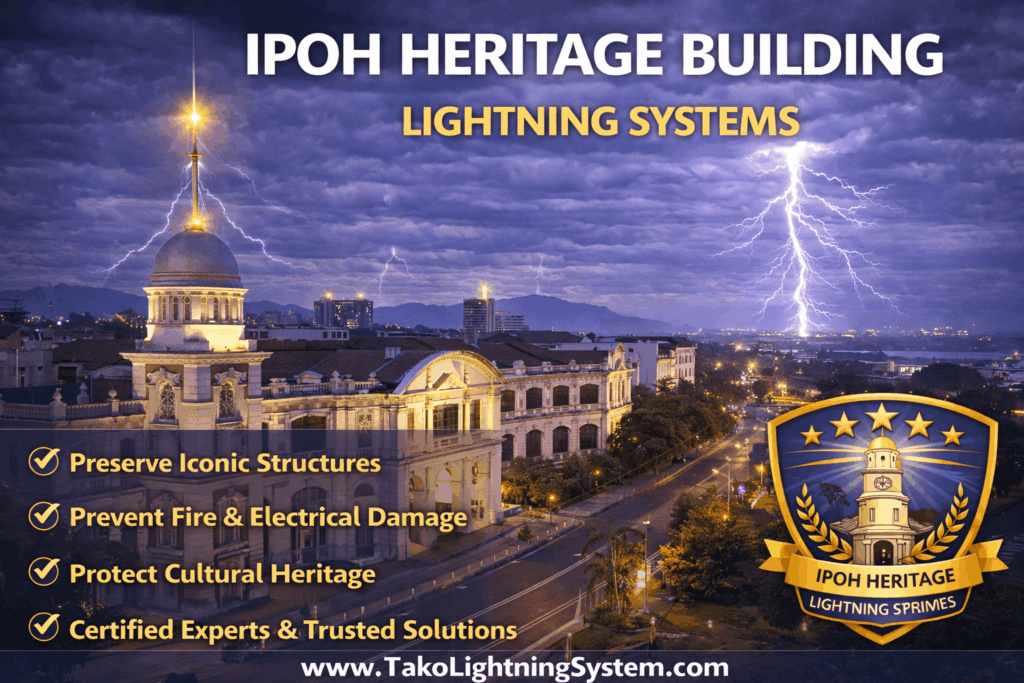
2. Technical Specifications for Heritage Illumination
To achieve E-E-A-T compliant results, lighting designers must look beyond the bulb. The technical specs of Ipoh heritage building lightning systems are what separate professional conservation from a DIY project.
Color Temperature (The Kelvin Scale)
The choice of Kelvin (K) is perhaps the most vital decision. Most Ipoh heritage structures are made of brick, timber, and lime plaster.
- 2700K to 3000K (Warm White): This is the gold standard for Ipoh heritage building lightning systems. It complements the warm tones of the limestone and the colonial-era “Ipoh White” paint, creating a nostalgic, welcoming glow.
- Avoid 5000K+ (Cool White): High-Kelvin lights make heritage buildings look clinical, flat, and ghostly. It strips the soul from the architecture.
Color Rendering Index (CRI)
If you are lighting a mural in Mural Art’s Lane or the intricate floor tiles of a boutique hotel, you need a high CRI (90+). High CRI ensures that colors appear as they would under natural sunlight. In professional Ipoh heritage building lightning systems, we prioritize the accuracy of color to preserve the artist’s original intent.
Beam Angles and Optical Precision
Floodlighting (wide beams) is often the enemy of heritage. It causes light pollution and “hot spots.” Instead, advanced Ipoh heritage building lightning systems utilize:
- Narrow Beams (5° – 15°): For highlighting vertical columns like those on the HSBC building.
- Linear Wall Grazers: To emphasize the texture of aged brickwork or intricate carvings.
3. Non-Invasive Installation: The “First, Do No Harm” Principle
One of the biggest challenges with Ipoh heritage building lightning systems is the physical installation. You cannot simply drill holes into 100-year-old masonry.
Non-Destructive Mounting
Expert installers use custom brackets, clamps, and free-standing poles. When wires must be run, they are tucked into existing architectural crevices or color-matched to the building’s facade. A truly professional Ipoh heritage building lightning systems should be virtually invisible during the day.
Heat Management
Older building materials can be sensitive to localized heat. Traditional halogen lamps are dangerous because they emit high infrared heat. Modern Ipoh heritage building lightning systems exclusively use LED technology, which remains cool to the touch and prevents the thermal expansion/contraction that can crack delicate lime plaster.
4. Case Studies: Success Stories in the Kinta Valley
Let’s look at how specific Ipoh heritage building lightning systems have transformed local landmarks.
The Ipoh Railway Station
Often called the “Taj Mahal of Ipoh,” this Edwardian Baroque masterpiece requires a symmetrical lighting approach. By using warm up-lighting on the massive columns and soft backlighting within the loggias, the building gains a sense of depth. This specific Ipoh heritage building lightning system highlights the grandeur of the domes without creating a glare that distracts drivers at the nearby roundabout.
Private Shophouse Restorations
In the heart of Old Town, many private owners are investing in Ipoh heritage building lightning systems for their boutique cafes and hotels. By using “shuttering” techniques, they can illuminate the facade while ensuring that no light spills into the guest rooms, proving that heritage lighting can be both beautiful and functional.
5. Navigating the Ipoh Climate and Environment
Ipoh is known for its heavy afternoon downpours and high humidity. These environmental factors are the “silent killers” of electrical systems.
Ingress Protection (IP) Ratings
Any outdoor Ipoh heritage building lighting system must have a minimum rating of IP65. For fixtures located at ground level where rain splashes are frequent, IP66 or IP67 is preferred. This prevents moisture from corroding the internal circuitry, a common cause of failure in poorly planned Ipoh heritage building lightning systems.
The “Insect Problem”
Tropical insects are naturally drawn to UV light. Professional Ipoh heritage building lightning systems use LED spectrums that minimize UV output. This not only keeps the building cleaner (fewer cobwebs and insect carcasses) but also makes the environment more pleasant for pedestrians.
6. Smart Innovation and Sustainability
Authoritative lighting design today must include a conversation about the environment.
Energy Efficiency
By switching from older metal-halide lamps to modern LED Ipoh heritage building lightning systems, building owners can reduce their energy consumption by up to 70%. This is vital for the long-term financial sustainability of heritage conservation.
Smart Controls and DMX Systems
Advanced Ipoh heritage building lightning systems now include DMX (Digital Multiplex) controls. This allows the city or building owner to:
- Dim lights automatically after midnight to save power.
- Change color themes for festivals like Hari Raya, Chinese New Year, or Deepavali.
- Monitor the health of each bulb from a smartphone app, ensuring the Ipoh heritage building lightning systems is always operational.
7. Regulatory Compliance: Working with MBI and Jabatan Warisan
You cannot simply change the look of a gazetted building. Before installing Ipoh heritage building lightning systems, owners must consult with:
- Majlis Bandaraya Ipoh (MBI): For local building permits and urban aesthetic guidelines.
- National Heritage Act 2005: If the building is a “Gred 1” or “Gred 2” heritage site, specific guidelines dictate how and where lights can be attached.
Compliance is a mark of trustworthiness. A reputable provider of Ipoh heritage building lightning systems will always handle the paperwork to ensure the project meets all legal Malaysian standards.
8. The Future of Ipoh’s Nightscape
As Ipoh continues to grow as a cultural hub, the demand for sophisticated Ipoh heritage building lightning systems will only increase. We are moving away from “just making it bright” toward “making it meaningful.”
The goal of any Ipoh heritage building lightning system should be to respect the shadows as much as the light. By carefully selecting the right fixtures, temperatures, and installation methods, we can ensure that Ipoh’s history isn’t just preserved in history books—it is celebrated every night.
Conclusion
Investing in high-quality Ipoh heritage building lightning systems is an investment in the city’s identity. Whether you are a business owner in Old Town or a conservationist, understanding the nuances of lighting technology is key to bringing our history to life.
When done correctly, an Ipoh heritage building lightning system doesn’t just light up a wall; it illuminates the soul of the city. As we look toward the future, let’s ensure that our Ipoh heritage building lightning systems are efficient, non-invasive, and breathtakingly beautiful.
Disclaimer
The information provided in this blog is intended for general informational purposes only. Prices, specifications, and availability may vary depending on suppliers, location, and market conditions. Readers should verify details directly with suppliers or manufacturers before making purchasing decisions. The author and website are not responsible for any errors, omissions, or outcomes resulting from the use of this information. Always consult a professional for advice tailored to your specific needs.

