
Lightning protection for manufacturing machinery requires more than a lightning rod. A complete factory protection strategy should assess the building’s lightning risk, external Lightning Protection System (LPS), earthing and bonding, Surge Protective Devices (SPDs), power and communication lines, and the specific requirements of critical machinery such as CNC machines, PLCs, VFDs and robotic systems.
TAKO provides design, risk assessment, supply, installation, testing and maintenance of lightning and surge protection systems for manufacturing facilities in Malaysia, with solutions designed around applicable MS IEC 62305 requirements.
TAKO since 1979 provides the MS IEC 62305 Compliant Best Lightning Protection System in Malaysia.
Need a Factory Lightning Protection Assessment?


What is Lightning Protection for Manufacturing Machinery?
Lightning protection for manufacturing machinery is a coordinated system designed to reduce damage from direct lightning strikes, transient over voltages and induced surges. It typically combines external lightning protection, surge protection devices, grounding and bonding, protection for power and communication lines, and a lightning risk assessment based on the facility’s electrical and physical characteristics.
1. Understanding the Risk: How Lightning Attacks Your Floor
Many facility owners mistakenly believe that if their building isn’t struck directly, their equipment is safe. This is a dangerous misconception. To implement effective lightning protection for manufacturing machinery, you must first understand the two primary modes of failure.
Direct Strikes vs. Indirect Surges
A direct strike to a factory chimney or roof is a high-intensity event that causes physical fire and structural damage. However, lightning protection for manufacturing machinery is more frequently concerned with indirect surges.
A strike up to a mile away can travel through power lines, underground pipes, or data cables, entering your facility as a transient overvoltage. While the building remains standing, the sensitive internal electronics of your machinery are instantly fried.
Vulnerable Assets on the Modern Factory Floor
Today’s manufacturing environment is more susceptible than those of twenty years ago. Why? Because of the miniaturization of components. We must prioritize best lightning protection for manufacturing machinery such as:
- Programmable Logic Controllers (PLCs): The command centers of automation that operate on low-voltage signals.
- Variable Frequency Drives (VFDs): Sensitive power conversion units that control motor speeds.
- Robotic Arms and Sensors: High-precision instruments where even a small voltage spike can cause calibration errors.
The “Hidden” Damage: Electronic Rust
Not every strike results in a dramatic “pop” and smoke. Many surges cause “electronic rust”—a gradual degradation of semiconductor junctions. Without proper lightning protection for manufacturing machinery, your equipment may suffer from mysterious “glitches” and premature board failures months after a storm has passed.
2. The Anatomy of an Industrial Lightning Protection System (LPS)
A robust strategy for lightning protection for manufacturing machinery is a multi-layered defense. It is often referred to as a “Total System” approach.
External Protection (The Shield)
The goal of external protection is to intercept the strike and conduct it safely to the earth.
- Air Terminals (Lightning Rods): These are strategically placed based on the “Rolling Sphere” method to ensure the highest probability of interception.
- Down Conductors: Heavy-duty copper or aluminum pathways that move the current down the sides of the building.
Internal Protection (The Filter)
Even with a shield, electromagnetic interference (EMI) can induce currents in internal wiring. This is where lightning protection for manufacturing machinery becomes granular.
- Surge Protection Devices (SPDs): These are installed at the main service entrance (Type 1) and at the individual machine control panels (Type 2). They act as high-speed switches that shunt excess energy to the ground.
- Equipotential Bonding: This is the process of linking all metallic objects and electrical systems to a common grounding bus. This prevents “side-flashing,” where electricity jumps from a conductor to a machine frame.
The Grounding Network
The foundation of all lightning protection for manufacturing machinery is the grounding system. In an industrial setting, we aim for a resistance of 10 ohms or less. If the ground is poor, the lightning energy has nowhere to go but through your CNC machines.
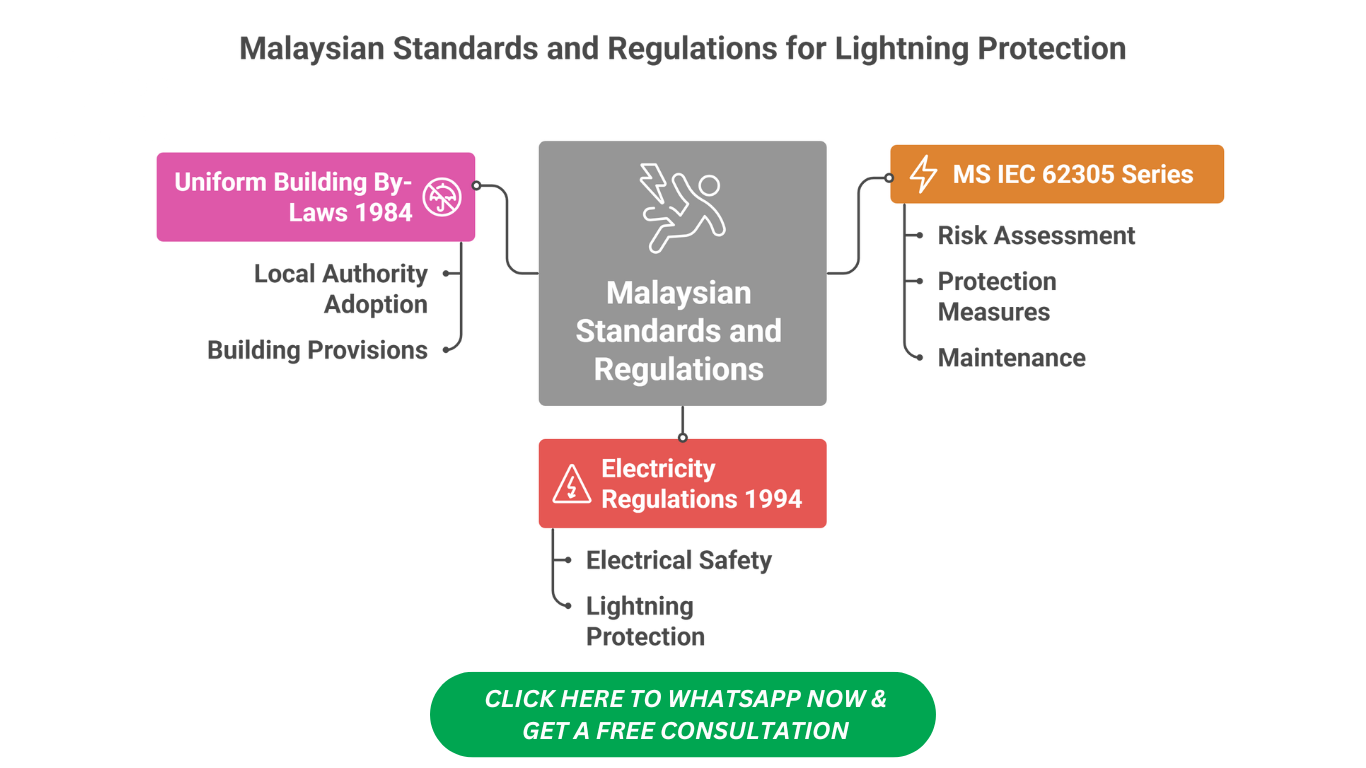
3. Industry Standards & Compliance: The Authoritative Core
To ensure your lightning protection for manufacturing machinery is up to professional standards, you must adhere to established safety codes.
- NFPA 780: This is the “gold standard” in the United States for the installation of lightning protection systems. It outlines the requirements for materials, bonding, and grounding.
- IEC 62305: The international benchmark. This four-part standard covers risk management and structural protection, providing the mathematical framework for industrial safety.
- UL 96A: Underwriters Laboratories provides a Master Label certificate for systems that meet stringent installation criteria. Having a UL-certified system for lightning protection for manufacturing machinery is often a prerequisite for obtaining industrial insurance at favorable rates.
Failing to meet these standards doesn’t just put your equipment at risk—it puts your insurance claims in jeopardy. Adjusters will look for “Standard of Care” compliance when evaluating a loss.
4. Step-by-Step Implementation for Manufacturing Plants
How do you transition from vulnerability to resilience? Implementing lightning protection for manufacturing machinery requires a phased approach.
Phase 1: Professional Risk Assessment
Every facility is unique. An expert will evaluate your local isokeraunic maps (lightning frequency), the height of your structure, and the critical nature of your equipment. A semiconductor plant requires a much higher level of lightning protection for manufacturing machinery than a basic warehouse.
Phase 2: Custom Engineering and Design
“Off-the-shelf” solutions rarely work for complex industrial layouts. Design engineers must account for the electromagnetic environment. In a factory with heavy arc welding or massive motors, the lightning protection for manufacturing machinery must be designed to distinguish between lightning surges and internal switching noise.
Phase 3: Certified Installation
Installation should never be left to general-purpose electricians who lack specific lightning safety training. A certified specialist ensures that the lead lengths on SPDs are kept short (to minimize inductance) and that all bonds are corrosion-resistant.
5. Maintenance: Ensuring Long-Term Reliability
An unmaintained system is a false sense of security. To keep your lightning protection for manufacturing machinery effective, you must establish a maintenance schedule.
- Annual Visual Inspections: Industrial environments involve vibration and temperature swings that can loosen connections. Check your down conductors and air terminals every year.
- Ground Resistance Testing: Soil conditions change. Use a “Fall-of-Potential” test to ensure your ground rods are still providing a low-impedance path.
- SPD Monitoring: Most industrial-grade SPDs have visual indicators (green/red lights) or remote monitoring contacts. If a surge has been suppressed, the module may need replacement to ensure continued lightning protection for manufacturing machinery.
6. Best Lightning Protection for Manufacturing Machinery
For manufacturing machinery, the best lightning protection is usually a coordinated surge protection system, rather than relying on a lightning rod alone.
Recommended protection
- Type 1 SPD – At the main incoming electrical panel to handle high-energy lightning currents.
- Type 2 SPD – At distribution boards feeding machinery, helping protect against residual and switching surges.
- Type 3 / point-of-use protection – Close to sensitive machine controls, PLCs, CNC systems, VFDs and automation equipment where required.
- Signal/data-line SPDs – For Ethernet, RS-485, control, instrumentation and communication lines entering machinery.
- Proper earthing & bonding – A low-impedance, properly bonded earthing system is essential so surge currents have a controlled path.
- Complete lightning protection system – For exposed manufacturing facilities, the external LPS should be designed together with internal surge protection using a risk-based approach under the IEC 62305 series.
IEC 61643-11:2025 specifically covers SPDs for AC low-voltage systems and protection against direct and indirect lightning effects, while IEC 61643-12 provides principles for SPD selection, location and coordination.
7. Expert Insight: Common Pitfalls and Real-World Mistakes
In my years of consulting, I have seen multimillion-dollar facilities fail due to simple oversights. When it comes to lightning protection for manufacturing machinery, avoid these three common errors:
- The “Back Door” Surge: Plants often protect their main power lines but forget about data cables, Ethernet lines, or phone lines. Lightning can enter through a rooftop security camera and travel straight into your server room.
- Improper Bonding of Rooftop Units: HVAC units and exhaust fans are often the highest points on a roof. If they are not properly bonded to the lightning protection for manufacturing machinery system, they become an entry point for high-voltage transients.
- Neglecting Communication Ports: Modern industry 4.0 machinery relies on interconnected data. Without surge protection on your Modbus or Profibus lines, your lightning protection for manufacturing machinery is incomplete.
8. Conclusion: The ROI of Resilience
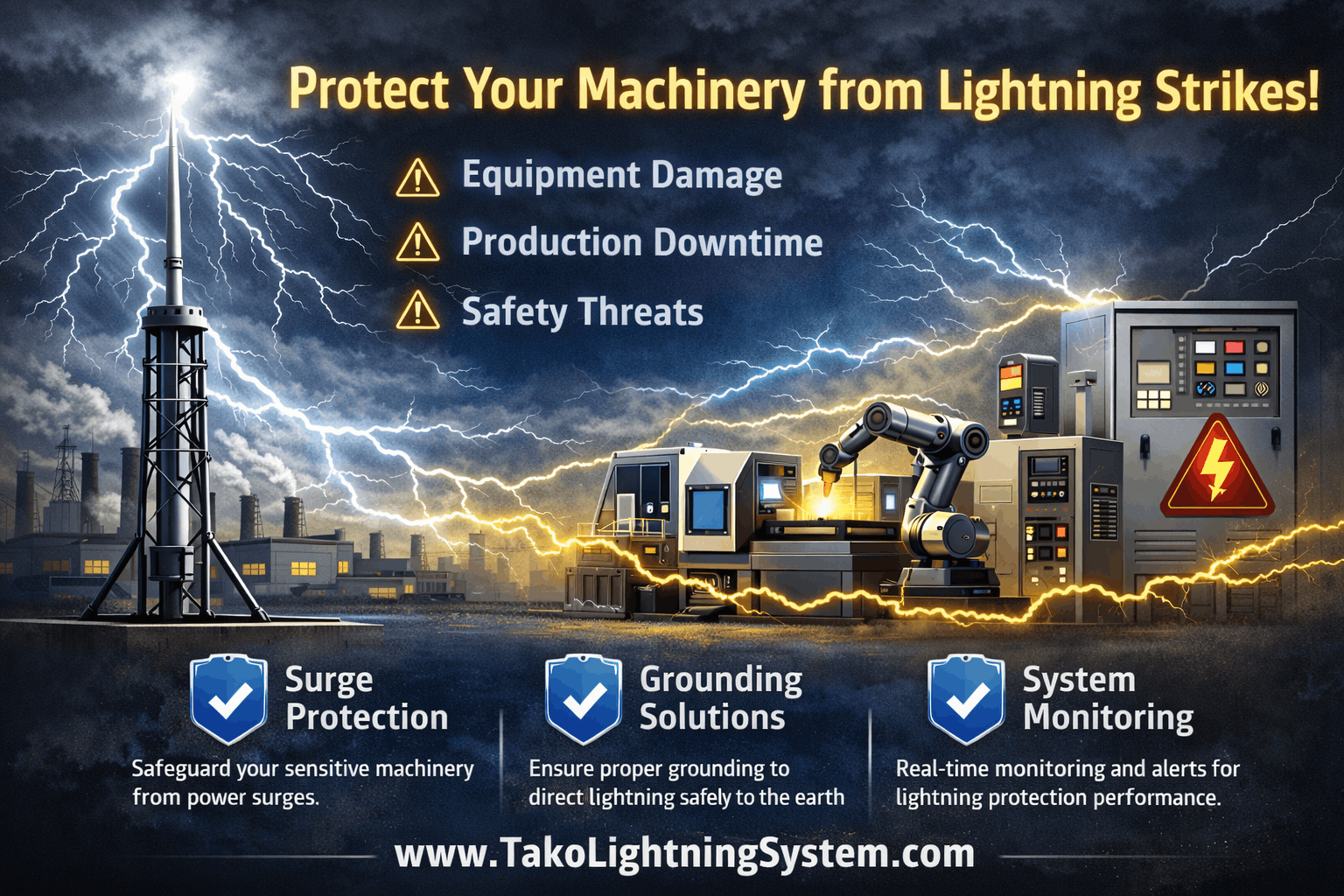
The initial cost of installing lightning protection for manufacturing machinery may seem significant, but it pales in comparison to the cost of downtime. Consider the price of a week-long shutdown, the cost of replacing custom-built circuit boards, and the potential for lost customer trust.
By following the standards of NFPA 780 and implementing a multi-layered surge suppression strategy, you transform your facility into a fortress. Lightning protection for manufacturing machinery is not just an engineering requirement—it is an investment in the longevity and reliability of your business.
Are you ready to safeguard your production floor? Don’t wait for the next storm to test your vulnerabilities. Contact a certified lightning protection specialist today to conduct a site-specific risk assessment and ensure your lightning protection for manufacturing machinery meets the highest industry standards.
Disclaimer
The information provided in this blog is intended for general informational purposes only. Prices, specifications, and availability may vary depending on suppliers, location, and market conditions. Readers should verify details directly with suppliers or manufacturers before making purchasing decisions. The author and website are not responsible for any errors, omissions, or outcomes resulting from the use of this information. Always consult a professional for advice tailored to your specific needs.
TAKO’s Credentials


