
Ipoh is world-renowned for many things—its limestone hills, its signature bean sprout chicken, and its rich colonial history. However, for plantation owners and estate managers in the Kinta Valley, Ipoh holds a more formidable title: one of the lightning capitals of the world. With an average of over 200 thunderstorm days per year, the risk to agricultural investments is staggering.
If you manage an oil palm estate, a durian orchard in Gopeng, or a rubber plantation near Chemor, you aren’t just battling pests and market fluctuations; you are battling the elements. This is why securing a professional Lightning Protection service for plantation Ipoh is not just a luxury—it is a critical pillar of risk management.
TAKO since 1979 has over 25+ years of Experience in offering MS IEC 62305 Compliant Best Lightning Protection System in Malaysia.
Why You Should Choose TAKO Lightning Protection System Malaysia

1. The “Lightning Hotspot” Reality of Perak
The geography of Perak, particularly the corridor surrounding Ipoh, creates a perfect storm for electrical activity. The heat from the lowlands meets the cool air of the Titiwangsa Range, resulting in violent convectional rain. For a plantation, which is essentially a vast expanse of tall, biological “lightning rods” (trees), the danger is constant.
When a strike hits a tree, it doesn’t just damage that one plant. The electrical discharge travels through the root system, often killing a cluster of surrounding trees. For high-value crops like Musang King durians or mature oil palms, a single storm can wipe out thousands of Ringgit in future yield. This is the primary reason why specialized Lightning Protection service for plantation Ipoh has become a booming necessity for modern agriculture.
2. Why Experience Matters: The Unique Challenges of Ipoh Soil
Experience in lightning protection isn’t just about knowing how to install a rod; it’s about understanding the ground. Ipoh’s terrain is unique. You have areas with heavy clay, pockets of sandy soil, and the ever-present limestone formations.
A generic “one-size-fits-all” grounding system will fail in Ipoh. Limestone is an insulator; it does not conduct electricity well. If your grounding system is installed in rocky terrain without the proper “Earth Enhancement Compounds,” the lightning bolt has nowhere to go. Instead of being dissipated safely, it may “jump” or “side-flash” to nearby worker quarters or irrigation pumps. A seasoned Lightning Protection service for plantation Ipoh will begin every project with a soil resistivity test to ensure the earth can actually handle the discharge.
3. Expertise: The Anatomy of a Plantation-Grade System
To provide true expertise, one must look at the MS IEC 62305 standard. This is the Malaysian Standard for lightning protection, and any reputable Lightning Protection service for plantation Ipoh must adhere to it strictly.
External Protection (The Shield)
This involves the installation of air terminals (lightning rods) on the highest points of your plantation infrastructure. This includes:
- Estate Bungalows & Offices: Protecting administrative hubs.
- Processing Mills: Where heavy machinery and dust create a high fire risk.
- Worker Quarters: Ensuring the safety of your most valuable asset—your people.
Internal Protection (The Surge Guard)
Modern plantations are becoming “Smart Plantations.” You likely use IoT sensors for soil moisture, automated Netafim irrigation systems, and solar power inverters. These are highly sensitive to surges. Even if lightning hits a kilometer away, the surge can travel through the power lines. A professional Lightning Protection service for plantation Ipoh will install Surge Protection Devices (SPDs) to clamp these voltages before they fry your electronics.
4. The Human Element: Protecting Your Workforce
In the agricultural sector, the safety of field workers is a moral and legal obligation. Statistics show that a significant portion of lightning casualties in Malaysia occur in open fields or under trees—the exact environment of a plantation.
When you hire a Lightning Protection service for plantation Ipoh, you are also investing in safety protocols. Authoritative service providers often recommend the 30/30 Rule: If you hear thunder within 30 seconds of seeing lightning, workers must seek shelter. If your plantation has designated “Safe Zones,” these shelters must be professionally grounded. Without a certified Lightning Protection service for plantation Ipoh, a simple zinc-roofed shed can become a death trap during a storm.
5. Authoritativeness: Compliance with Malaysian Regulations
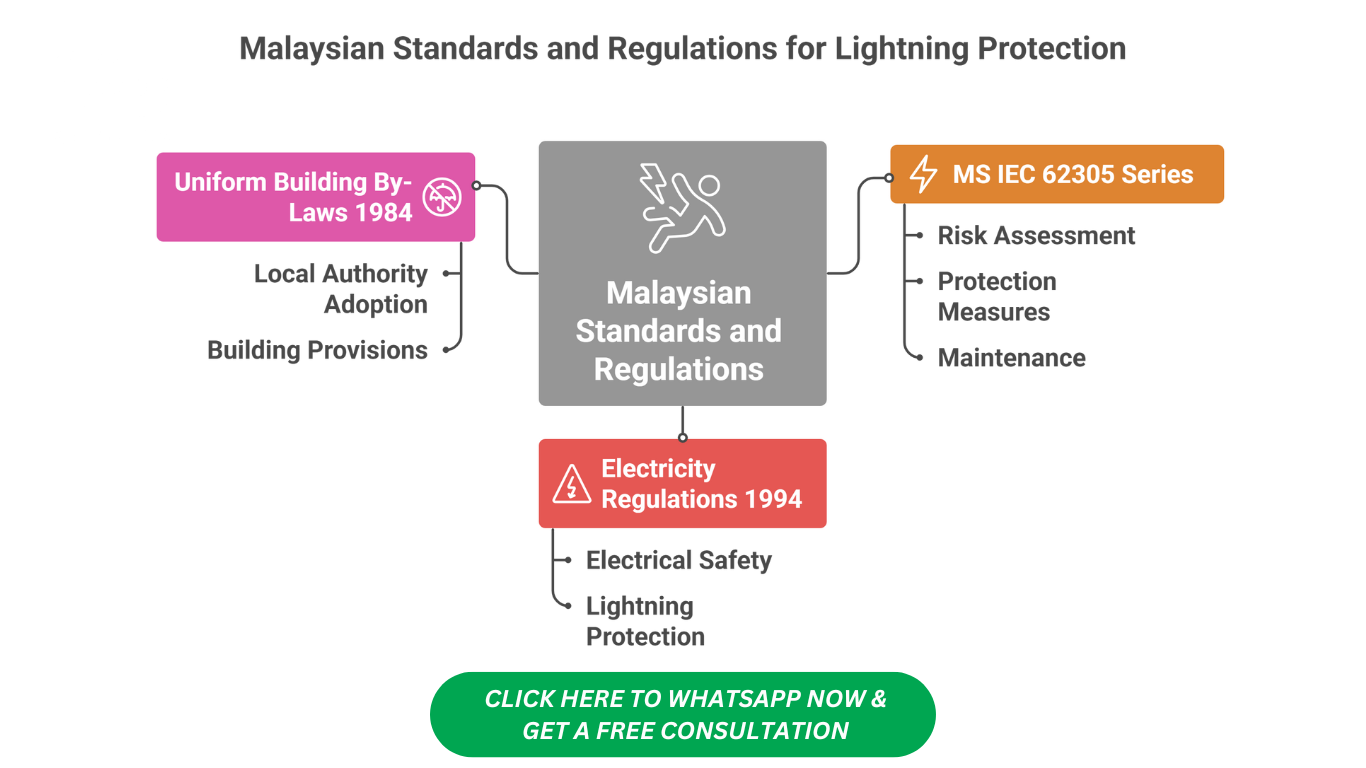
In Malaysia, the Department of Occupational Safety and Health (DOSH) and the Energy Commission (ST) have strict guidelines regarding electrical safety. For plantation owners, staying compliant is key to avoiding heavy fines or legal liability in the event of an accident.
By employing a certified Lightning Protection service for plantation Ipoh, you receive documentation and test reports that prove your system meets the MS IEC 62305 requirements. This “Paper Trail of Safety” builds your authority as a responsible plantation owner and is often a prerequisite for obtaining or renewing operating licenses for processing mills.
6. Trustworthiness: The Economic ROI of Protection
Is it expensive to install a lightning protection system? It is certainly an investment. However, let’s look at the return on investment (ROI).
- Insurance Premiums: Most major insurers in Malaysia, such as Allianz or MSIG, offer better terms for agricultural properties that have certified lightning protection.
- Asset Longevity: Replacing a blown transformer or an industrial-grade irrigation pump can cost tens of thousands of Ringgit. A Lightning Protection service for plantation Ipoh prevents these sudden, unbudgeted expenses.
- Yield Protection: In oil palm, a lightning strike often leads to “Basal Stem Rot” or opportunistic fungal infections in the weakened trees. By reducing strikes within the plantation core, you maintain your Tonnage Per Hectare (TPH).
A trustworthy Lightning Protection service for plantation Ipoh will provide you with a transparent cost-benefit analysis before you sign a contract.
7. Selecting the Right Lightning Protection Service for Plantation Ipoh
Not all contractors are created equal. When searching for a Lightning Protection service for plantation Ipoh, look for the following “Green Flags”:
- Local Knowledge: They should be familiar with Perak’s weather patterns.
- Technical Equipment: Do they use calibrated soil resistivity meters?
- Materials: Do they use high-quality copper or stainless steel, or are they trying to cut corners with galvanized iron that will rust in Ipoh’s humidity?
- Warranties: A reliable Lightning Protection service for plantation Ipoh will offer a multi-year warranty on their installation and earthing resistance.
8. Maintenance: The Forgotten Step
The tropical heat and heavy rains of Perak are corrosive. A system installed five years ago might not work today due to soil erosion or cable theft (a common issue in remote estates).
Part of a comprehensive Lightning Protection service for plantation Ipoh includes an annual audit. Engineers will check the “Ohms” (resistance) of your earthing pits. If the resistance is too high, your protection is useless. Regular maintenance ensures that when the inevitable October monsoon hits, your system is ready to perform.
9. Case Study: Protecting a Durian Orchard in Simpang Pulai
Recently, a 50-acre durian orchard in Simpang Pulai faced repeated losses. Every storm season, they lost at least 3-5 mature trees. After consulting with a professional Lightning Protection service for plantation Ipoh, they installed a hybrid system. They used tall masts to protect the highest ridges and surge protectors for their automated fertigation system. In the two years since installation, they have reported zero tree losses due to lightning and zero downtime for their irrigation pumps. This is the power of a specialized Lightning Protection service for plantation Ipoh.
10. Conclusion: Don’t Wait for the Thunder
In the plantation business, we often talk about “weathering the storm” metaphorically. In Ipoh, you have to do it literally. Lightning is a force of nature that cannot be stopped, but it can be controlled and diverted.
Investing in a Lightning Protection service for plantation Ipoh is an investment in peace of mind. It protects your workers, your high-tech equipment, and your trees. If you haven’t audited your estate’s lightning readiness this year, now is the time. Contact a specialist Lightning Protection service for plantation Ipoh and ensure that your harvest remains safe, rain or shine.
Frequently Asked Questions (FAQ)
Can I just install a tall pole myself to act as a lightning rod?
No. Without proper calculation of the “Zone of Protection” and professional earthing, a DIY pole might actually attract lightning toward your buildings without safely grounding it, increasing the risk of fire. Always consult a professional Lightning Protection service for plantation Ipoh.
How often should I test my plantation’s grounding system?
According to Malaysian standards, you should have a Lightning Protection service for plantation Ipoh conduct a test at least once a year, preferably before the peak monsoon seasons (April and October).
Does lightning protection help with my plantation’s solar panels?
Absolutely. Solar panels are highly vulnerable to indirect strikes. A specialized Lightning Protection service for plantation Ipoh will include DC surge protectors specifically for solar arrays.
Is copper better than aluminum for plantation earthing?
In the acidic soil often found in Perak plantations, copper is generally preferred for its conductivity and corrosion resistance. Your Lightning Protection service for plantation Ipoh will recommend the best material based on your specific soil pH.
Disclaimer
The information provided in this blog is intended for general informational purposes only. Prices, specifications, and availability may vary depending on suppliers, location, and market conditions. Readers should verify details directly with suppliers or manufacturers before making purchasing decisions. The author and website are not responsible for any errors, omissions, or outcomes resulting from the use of this information. Always consult a professional for advice tailored to your specific needs.

