

TAKO since 1979 Provides SPD for CCTV Camera System Malaysia
CCTV Camera System is one of the most important security equipment in any property. In Malaysia where Lightning Strike is quite common, Surge Protection System installation for CCTV Camera System is Crucial.
TAKO since 1979, a Sole-Distributor of Telebahn SPD, offers CCTV Surge Protection in Malaysia. It has IEC61643 Compliant SPD for CCTV in Malaysia.
A typical afternoon in Malaysia: the sky darkens, and a powerful thunderstorm rolls in. The air crackles with electricity, and the rain hammers down. While you’re safe inside, a single lightning strike—even a kilometre away—can send a devastating power surge through the electrical lines, silently frying the delicate motherboards of your CCTV cameras and recorder. You might not even know it until days later, when you need crucial footage the most, only to find a blank screen or a system that’s permanently offline.
This scenario is not just a possibility; it’s a common occurrence in a country known for its intense tropical weather. Your CCTV system is your 24/7 watchman, a critical investment for the security of your business, home, and assets. But who protects the watchman?
The answer lies in a small, often overlooked, but absolutely vital component: the Surge Protective Device (SPD). This ultimate guide will demystify SPDs, explain why they are non-negotiable for any CCTV system in Malaysia, and provide you with the expert knowledge to choose and install the right one.
TAKO since 1979 provides the MS IEC 62305 Compliant Best Lightning Protection System in Malaysia.
What Exactly is a Surge Protection for CCTV Systems? Demystifying Your CCTV’s First Line of Defence
Let’s start with a simple analogy. Think of your home’s plumbing system. If the water pressure suddenly skyrockets to dangerous levels, a pressure relief valve kicks in, releasing the excess water to prevent the pipes from bursting.
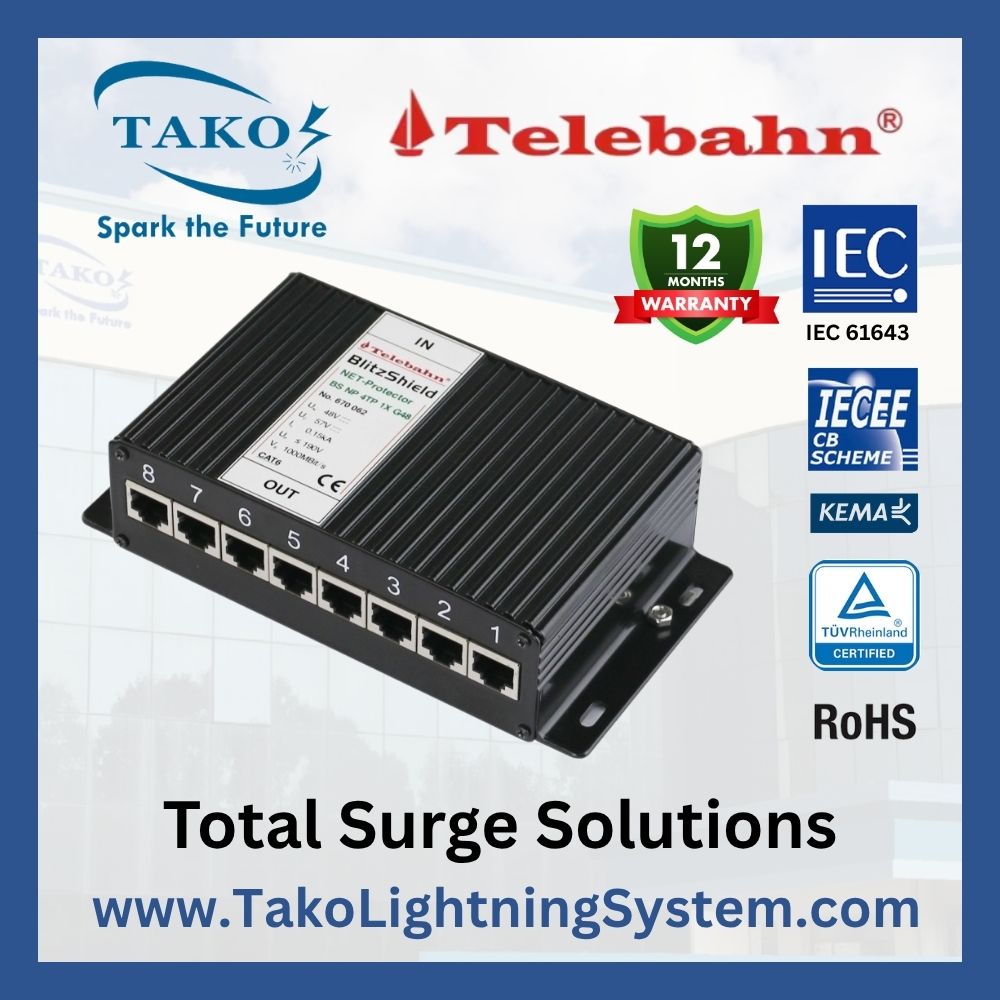
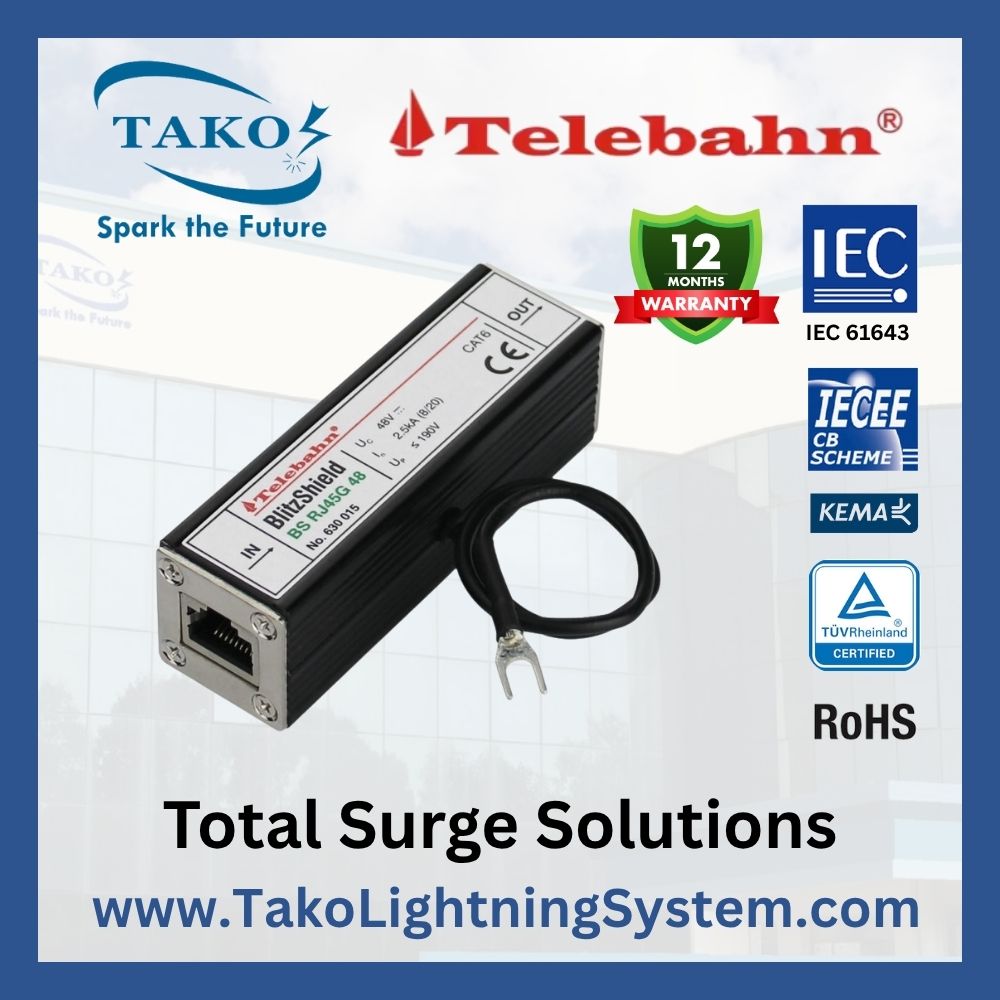
An SPD for your CCTV camera system works in much the same way, but for electricity. It acts as a high-speed security guard stationed at the entrance of your system’s electrical pathways. Under normal conditions, it allows standard electrical current to pass through unimpeded. But when it detects a massive, sudden spike in voltage—a surge—it instantly activates and shunts the excess electricity safely to the ground.
A Peek Inside the Technology
While you don’t need to be an engineer, understanding the basics builds confidence. Most SPDs rely on components like:
- Metal Oxide Varistors (MOVs): These are the workhorses. They have a variable resistance that drops dramatically when exposed to high voltage, creating a low-resistance path for the surge to be diverted to the earth wire.
- Gas Discharge Tubes (GDTs): These contain an inert gas that ionizes and becomes a conductor during a high-voltage event, providing a robust path for large surge currents, like those from nearby lightning strikes.
In essence, an SPD sacrifices itself to save your far more expensive equipment—a CCTV camera can cost hundreds or thousands of Ringgit, while a quality SPD is a fraction of the price. It’s the most cost-effective insurance policy you can buy for your security system.
Why is a Surge Protection Device for CCTV Crucial in Malaysia?
While power surges can happen anywhere, the risk is exponentially higher in Malaysia. Here’s why an SPD isn’t just an optional extra; it’s a core component of any professionally designed security system here.
1. The Malaysian Climate Factor: The Lightning Capital
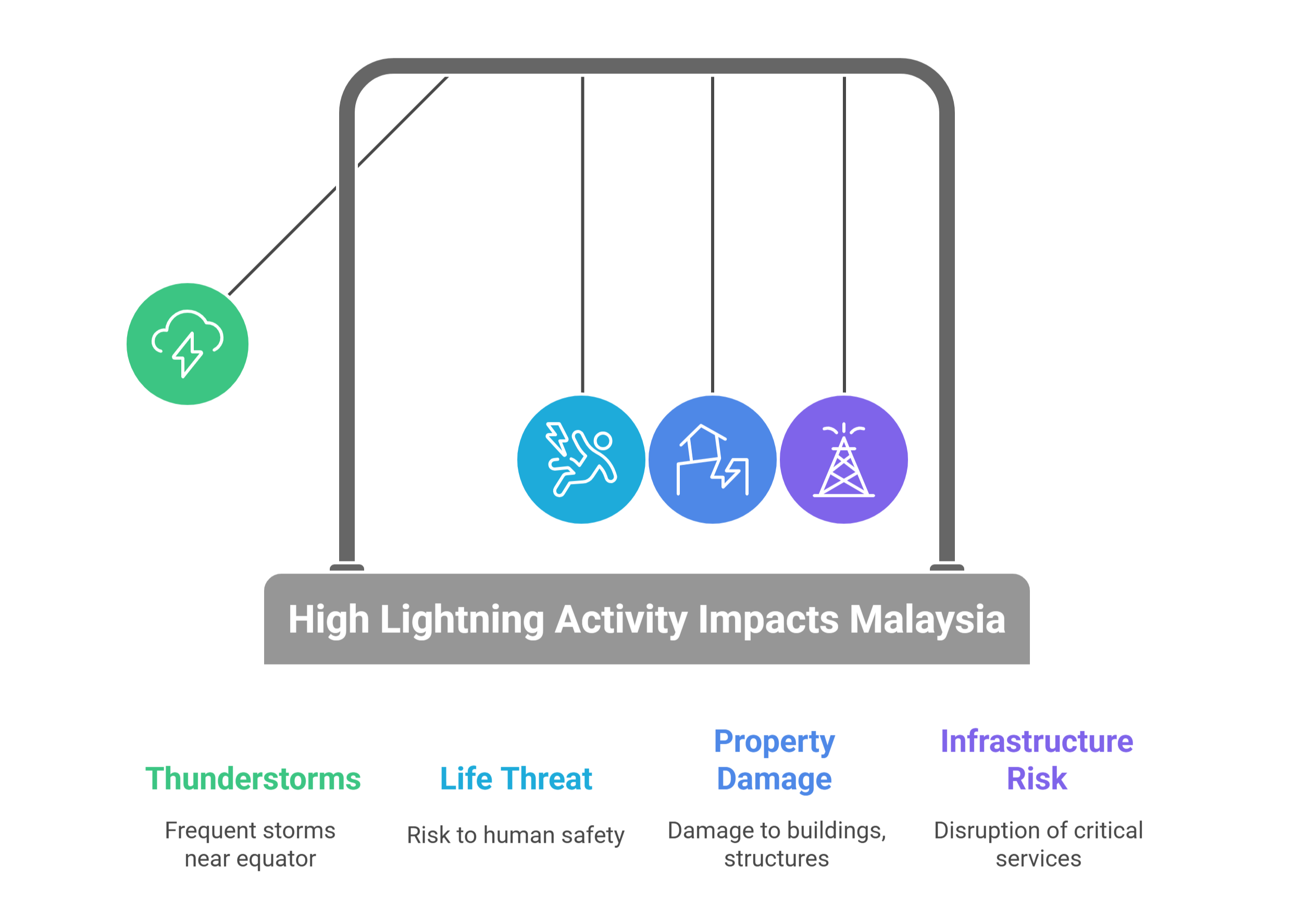
Southeast Asia, and Malaysia in particular, is a global hotspot for thunderstorm activity. The combination of high heat and humidity creates perfect conditions for the formation of intense and frequent thunderstorms. According to data from lightning detection networks, the region has one of the highest densities of lightning strikes in the world. This isn’t just an anecdote; it’s a quantifiable, severe, and persistent environmental threat.
2. The Cost of Neglect is Far Too High – Importance of CCTV Lightning Protection
Failing to install an SPD is a gamble with very poor odds. The consequences are threefold:
- Financial Loss: A single surge event can destroy not just one, but multiple components simultaneously. Imagine replacing your high-resolution IP cameras, your sophisticated Network Video Recorder (NVR), your PoE (Power over Ethernet) switches, and even monitors. The bill can easily run into thousands of Ringgit, far outweighing the modest cost of a comprehensive SPD solution.
- Catastrophic Security Risk: This is the most significant danger. Your CCTV system is your silent guardian. If it’s knocked out by a surge, you are left completely vulnerable to theft, vandalism, or other security incidents during the exact moment you need it most. The inability to provide critical footage to authorities can have lasting repercussions.
- Irreplaceable Data Loss: Footage of an incident is often a one-time record. Once lost due to hardware failure from a surge, it is gone forever. This can be devastating for legal cases, insurance claims, or internal investigations.
Debunking Common Myths About Surge Protection from Lightning
Let’s clear up some dangerous misconceptions:
- Myth 1: “My CCTV is on a UPS (Uninterruptible Power Supply), so it’s protected.”
- Truth: A UPS is designed primarily to provide backup power during an outage and offer basic line conditioning. While some high-end UPS models include surge protection, many are not rated to handle the massive, instantaneous current of a direct or indirect lightning strike. An SPD is a dedicated device designed specifically for this task.
- Myth 2: “The building’s main circuit breaker or stabilizer will handle it.”
- Truth: Circuit breakers and voltage stabilizers protect against overloads (too much current) or minor fluctuations. They operate on a timescale of milliseconds to seconds. A lightning surge travels at microsecond or nanosecond speeds—far too fast for a conventional breaker to react. The surge will have already blasted through your electronics long before the breaker ever thinks about tripping.
Why CCTV Systems in Malaysia MUST Have Surge Protection
Malaysia is one of the highest lightning-strike regions in Southeast Asia, making CCTV systems extremely vulnerable.
Without proper SPD for CCTV camera system Malaysia:
- ⚠️ Cameras stop working during storms
- ⚠️ NVR systems get permanently damaged
- ⚠️ Lightning surges travel through LAN cables
- ⚠️ Security coverage is completely lost
👉 This is why surge protection for CCTV systems is not optional—it is essential in Malaysia.
Where Should SPD Be Installed in CCTV Systems?
To fully protect your system, SPD must be installed at 3 critical points:
1. Power Supply Protection
- Installed at DB or power source
- Protects against direct lightning surges
2. Data Line Protection (RJ45 / PoE)
- Prevents surge through network cables
- Critical for IP camera systems
3. Video Signal Protection (Coaxial)
- Required for analog CCTV systems
💡 A complete SPD for CCTV camera system Malaysia always includes all three layers.
How Lightning Damages CCTV Systems (Hidden Risk)
Most people think lightning only affects power lines—but in reality:
- Surges enter through Ethernet cables
- Travel across metal structures
- Affect multiple devices at once
That’s why a basic plug protector is NOT enough.
👉 Only a professionally installed surge protection system can handle Malaysia’s lightning conditions.
How to Choose the RIGHT SPD for Malaysian CCTV System
Not all surge protectors are created equal. Selecting the correct SPD requires a layered approach, often referred to as coordinated surge protection. Here’s your actionable guide.
1. Identify the Types of Protection You Need
Your CCTV system has multiple entry points for surges. A comprehensive strategy protects all of them.
- AC Power Line Protection (Type 2 / Class C): This is your first and most critical layer. This SPD is installed at your main electrical distribution board or sub-panel to protect the power supply feeding your NVR/DVR and any power adapters. It stops the bulk of a surge coming from the mains.
- Coaxial Cable Protection (for Analog/AHD/TVI Cameras): If you have an older analog-based system, the coaxial cable carrying the video signal is a perfect antenna for surges. A coaxial SPD is installed in-line between the camera and the DVR to protect the video signal path.
- Data Line Protection (for IP Camera Systems): Modern IP cameras use Ethernet (RJ45) cables, which carry both data and power (PoE). These data lines are extremely sensitive. A data line SPD is installed between the camera and the PoE switch/injector to protect the network ports from induced surges. This is crucial for PoE systems.
2. Understand the Key Technical Specifications
Don’t be intimidated by the specs. Focus on these three critical ratings:
- Clamping Voltage (Vc): This is the voltage level at which the SPD becomes active and starts diverting the surge. Lower is better for sensitive electronics like CCTV gear. Look for clamping voltages below 400V for power lines.
- Energy Absorption/Dissipation Rating (in Joules) or Maximum Surge Current (in kA): This indicates how much of a punch the SPD can take. It’s the total “shock absorption” capacity. For Malaysia’s high-risk environment, higher is better. For main AC protection, look for a minimum of 40kA per phase. For point-of-use devices, a rating of 5-10kA is common.
- Response Time: How fast the SPD reacts. Modern SPDs are incredibly fast, with response times in the nanosecond range. Any reputable device will be fast enough; this is rarely a differentiating factor among quality products.
3. Look for Local & International Certifications – The Trust Mark
This is perhaps the most critical step for ensuring safety and effectiveness in Malaysia.
- ST/SIRIM Certification: This is non-negotiable. The SIRIM QAS International Sdn Bhd mark (often just called “SIRIM”) is Malaysia’s official standards and quality assurance body. An electrical product with this mark has been tested and certified to be safe for use in the Malaysian market. Using a non-SIRIM certified SPD is a fire and safety hazard. Always look for the ST/SIRIM label.
- International Standards: Look for compliance with international standards like IEC 61643-11, which governs surge protective devices connected to low-voltage power systems.
4. Consider Brand Reputation and Warranty
Stick with reputable, well-known brands in the surge protection and electrical industry. These companies invest in research, testing, and quality control. Furthermore, check if the SPD comes with a connected equipment warranty. This is a manufacturer’s guarantee that if their SPD fails to protect your connected devices (up to a certain value), they will cover the replacement cost. This is a powerful testament to the manufacturer’s confidence in their product.
Benefits of Installing SPD for CCTV Camera System Malaysia
- 🔒 Continuous surveillance during thunderstorms
- 💰 Saves cost on equipment replacement
- ⚡ Protects against lightning-induced surges
- 📉 Reduces downtime and maintenance
- 📊 Improves system reliability
⚠️ Common Mistakes That Kill Rankings (and Systems)
- ❌ Only installing power SPD
- ❌ Ignoring Ethernet surge protection
- ❌ Poor grounding system
- ❌ Using cheap, non-certified devices
Why Choose a Professional Surge Protection Company in Malaysia
A trusted expert ensures:
- ✔ Proper SPD selection (Type 1 / 2 / 3)
- ✔ MS IEC / IEC 61643 compliance
- ✔ Full system coverage
- ✔ Long-term performance
📌 Final Verdict
Installing an SPD for CCTV camera system Malaysia is the most effective way to protect your surveillance system from lightning damage, ensuring uninterrupted security, longer equipment lifespan, and reliable performance in Malaysia’s high-risk lightning environment.
Your Peace of Mind is Worth the Investment – SPD for CCTV Camera System Malaysia
In the relentless tropical climate of Malaysia, hoping your CCTV system survives the next major storm is not a strategy. Your security infrastructure is too valuable to leave to chance. A Surge Protective Device (SPD) is not an accessory; it is a fundamental component of a resilient and reliable security system.
Don’t wait for the next thunderclap to reveal a critical vulnerability in your security. Be proactive
FAQ: Surge Protectors for CCTV in Malaysia
What is an SPD and why do I need it?
An SPD (Surge Protective Device) protects your CCTV from voltage spikes caused by lightning (common in Malaysia) or power grid fluctuations. It prevents costly damage to your cameras and recorder.
What’s the most important installation rule?
PROPER GROUNDING. The SPD must be connected to a good earth ground. Without this, it is completely useless. This is the #1 reason for failure.
Do SPDs require maintenance?
Yes, simple maintenance:
Visual Check: Many have an LED indicator (usually green) to show they are working. If the light is off or red, the SPD may need replacement.
Physical Check: After a major thunderstorm, it’s good practice to check that all connections are still tight, especially the grounding wire.
Replacement: SPDs are sacrificial devices. They degrade over time. If you experience a very large surge, it’s wise to replace the SPDs even if the indicator looks okay.
Disclaimer
The information contained in this blog on SPD for CCTV Camera System Malaysia is for informational and marketing purposes only and should not be taken as professional advice.
We provide protection systems for CCTV; we do not sell surveillance cameras or any extension socket Malaysia.
Our focus is on providing comprehensive LPS total solution services including SPD for CCTV Malaysia. This service encompasses a wide range of solutions, including design, installation, and maintenance of a comprehensive lightning protection system tailored to your specific needs. For any questions or to discuss your specific lightning protection needs, please contact us directly.

