
What Alex Honnold Touched at Taipei 101 – Is it Skyscraper Lightning Protection?

It is one of the most vertigo-inducing images of the year. In his recent National Geographic special, world-renowned climber Alex Honnold ascended one of the tallest skyscrapers on the planet—Taipei 101. The climb was grueling, technical, and terrifying. But as he pulled his body over the final ledge to stand on the absolute pinnacle of the spire, viewers noticed him hugging a thick metal pole for stability.
The question flooded the internet immediately: What was Alex Honnold holding?
He wasn’t just holding a flagpole or an architectural ornament. He was holding the building’s lifeline. Alex Honnold was holding the Lightning Air Terminal.
⚠️ WARNING: The Air Terminal depicted is a high-voltage safety component. For the safety of your personnel and facility, never handle equipment without proper isolation and professional training.
The “Stick” That Saves Lives: The Lightning Air Terminal
When Alex Honnold reached the summit of Taipei 101, he wasn’t just standing on a tall building; he was standing on a massive lightning magnet. Due to their extreme height, towers like these are struck by lightning frequently—Taipei 101 is estimated to be hit dozens of times a year. This makes Skyscraper Lightning Protection not just a safety feature, but a structural necessity. The metal air terminal Honnold used to stabilize himself is actually the “crown jewel” of a complex engineering system designed to intercept millions of volts of electricity.
The Engineering Behind Alex Honnold Taipei 101 Climb: Understanding Skyscraper Lightning Protection
Without robust Skyscraper Lightning Protection, a building of that magnitude would be a sitting duck. The energy from a storm needs a path of least resistance to the ground. If that dedicated path isn’t provided by the lightning protection system, the bolt will find its own way—often tearing through concrete, shattering windows, or exploding internal electrical grids. The rod Honnold gripped is connected to massive down-conductors running the entire length of the building, ensuring that when the sky opens up, the building (and everyone inside) remains untouched.
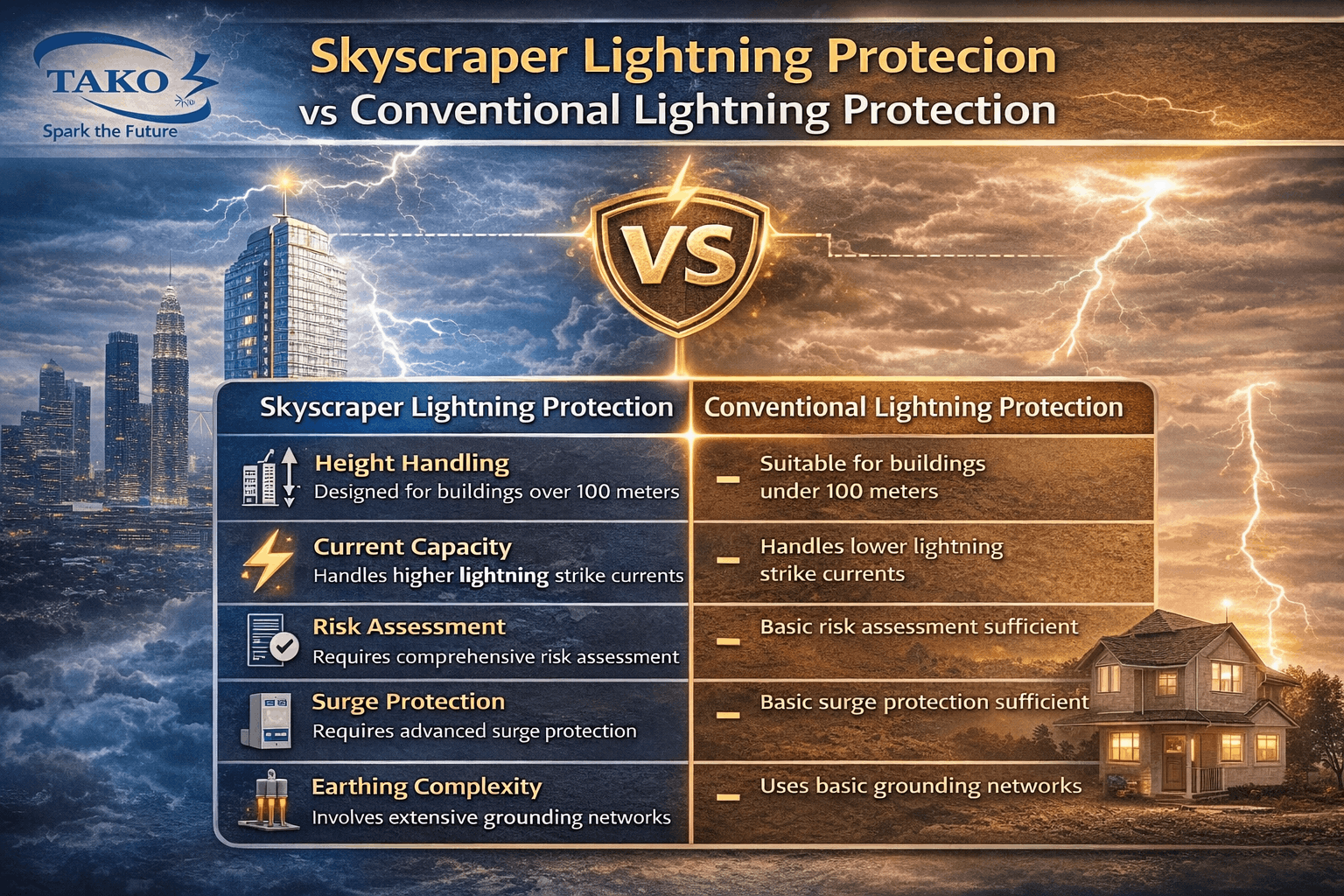
Designing Skyscraper Lightning Protection similar to Taipei 101 lightning protection system, is significantly more challenging than protecting a standard 2-story home. The physics change at 1,600 feet in the air. The system must account for “upward streamers”—where the building actually sends a charge up to meet the cloud—as well as side flashes. This is why the “stick” Honnold held is so robust; it is the anchor of a sophisticated Skyscraper Lightning Protection network that ensures the tower survives the harsh tropical storms of Taiwan, just as TAKO’s systems ensure buildings survive the storms of Malaysia
The “Safety-First” Guide to Air Terminals
The Reality vs. the Image
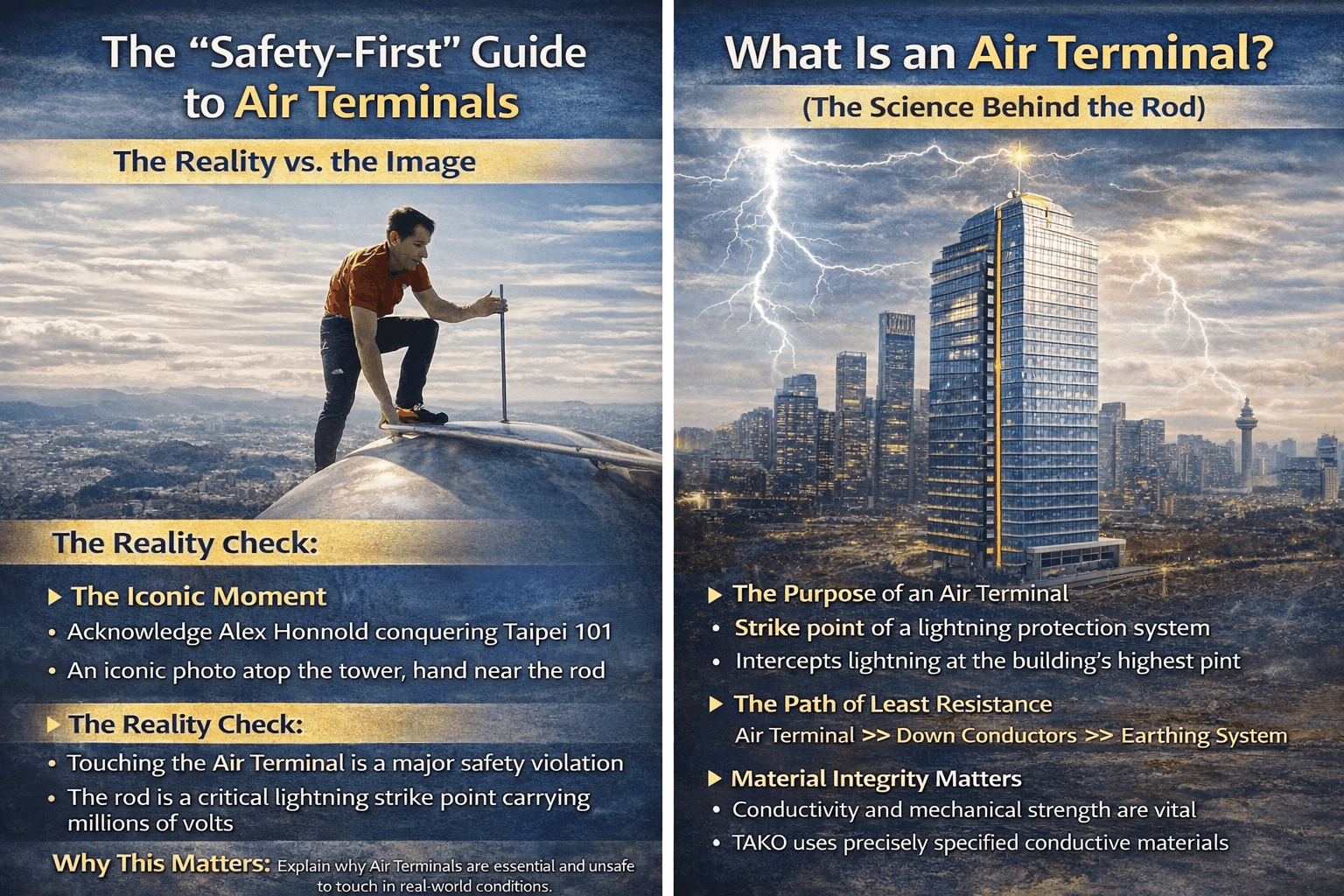
The Iconic Moment
When Alex Honnold reached the top of Taipei 101, the image quickly became legendary. A world-class climber, standing calmly at one of the tallest skyscrapers on earth, hand near a slim metal rod against the open sky—it looks fearless, almost poetic. For many viewers, it symbolized human courage at extreme heights.
The Reality Check
But here’s the truth most people don’t realize: in the real world, touching an air terminal is a serious safety violation.
That slim metal rod is not a harmless accessory. It is a critical component of a Skyscraper Lightning Protection System, engineered to attract and safely channel lightning strikes—carrying millions of volts—away from the structure and into the ground.
Why This Matters
This guide explains what an air terminal really does, why strict physical distance is mandatory, and why professional design and installation are non-negotiable for skyscraper safety—especially in lightning-dense regions like Malaysia.
Why Touching Is Dangerous (The “Honnold” Warning)
Static Charge & Atmospheric Energy
Even without a visible lightning strike, air terminals can accumulate static electrical charge during storm conditions. This stored energy can discharge suddenly, with severe consequences.
High-Voltage Components by Design
Air terminals are not passive metal poles. They are active electrical conductors, designed to interact with atmospheric electrical fields. Touching them exposes the human body to dangerous voltage differentials.
The Proximity Hazard
During a lightning event, being close to an air terminal can result in:
- Side flashes (lightning jumping to nearby objects or people)
- Direct electrocution
- Severe burns or cardiac arrest
This is why international lightning protection standards mandate minimum separation distances between air terminals and accessible areas.
A Critical Clarification
The Alex Honnold image represents a highly controlled, exceptional situation, not a real-world maintenance scenario.
It should never be imitated by:
- Building maintenance teams
- Contractors
- Rooftop workers
- The public
In everyday conditions, such contact is extremely dangerous.
The Data: Why Taipei 101 Needs a “Lightning Magnet”
Taipei 101 is not just a building; scientifically speaking, it is a lightning conductor. Research into supertall structures reveals a frightening reality: Taipei 101 is struck by lightning an average of 14 to 20 times every single year.
Without the dedicated Skyscraper Lightning Protection system that connects the rod Honnold held to the ground, the building would suffer catastrophic damage.
According to atmospheric research, buildings over 100 meters tall do not just intercept lightning—they actually trigger it. This phenomenon is known as “upward lightning.” The electric field at the top of the spire becomes so intense that it sends an “upward leader” to meet the storm cloud. The air terminal Honnold held is designed to initiate this connection safely, acting as the sacrificial point to save the glass and steel structure below.
The Malaysian Context: Higher Risk Than Taiwan?
While Taipei faces typhoons, Malaysia sits in one of the most electrically active regions on the planet.
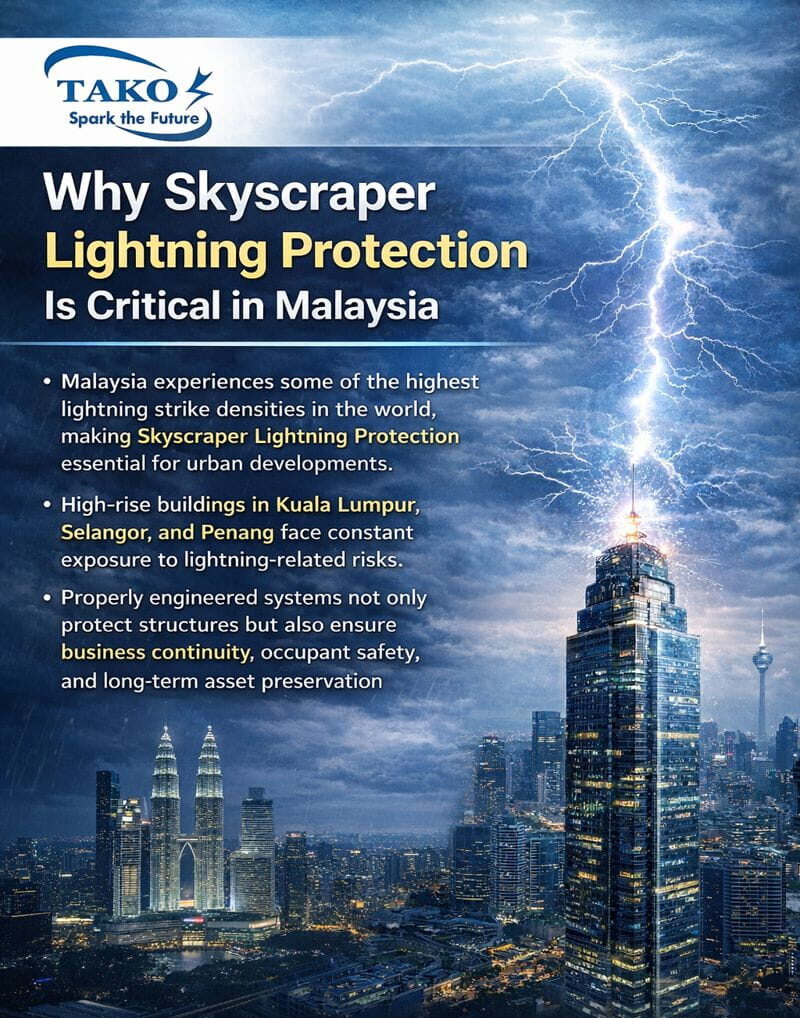
Meteorological data indicates that the Klang Valley experiences approximately 200 thunderstorm days per year. To put that in perspective, London experiences fewer than 20. This gives Malaysia one of the highest “Isokeraunic Levels” (lightning frequency) in the world.
This data proves that Lightning Protection for Skyscrapers is not a luxury in Malaysia—it is a statistical necessity. The probability of a high-rise in Kuala Lumpur being struck is exponentially higher than in most Western cities.
Why Skyscraper Lightning Protection Is Critical
Public Safety & Structural Integrity: The sheer energy of a lightning bolt can superheat moisture in concrete, causing it to explode (spalling). Professional protection is the only way to mitigate this danger.
One of the World’s Lightning Capitals: Malaysia ranks among the top nations globally for lightning density. The Klang Valley alone experiences intense thunderstorms nearly 200 days a year, making any tall structure a statistical target.
Height Increases Probability: As skyscrapers dominate the Malaysian skyline, they naturally become that path. Without dedicated Skyscraper Lightning Protection, a building essentially invites a strike directly into its structural frame.
Preventing Electronic Catastrophe: Modern skyscrapers are “smart” buildings, filled with sensitive servers, elevator systems, and security networks. A direct strike doesn’t just break concrete; the resulting surge can fry millions of Ringgit worth of equipment instantly.
Components of Lightning Protection System for High Rise Buildings
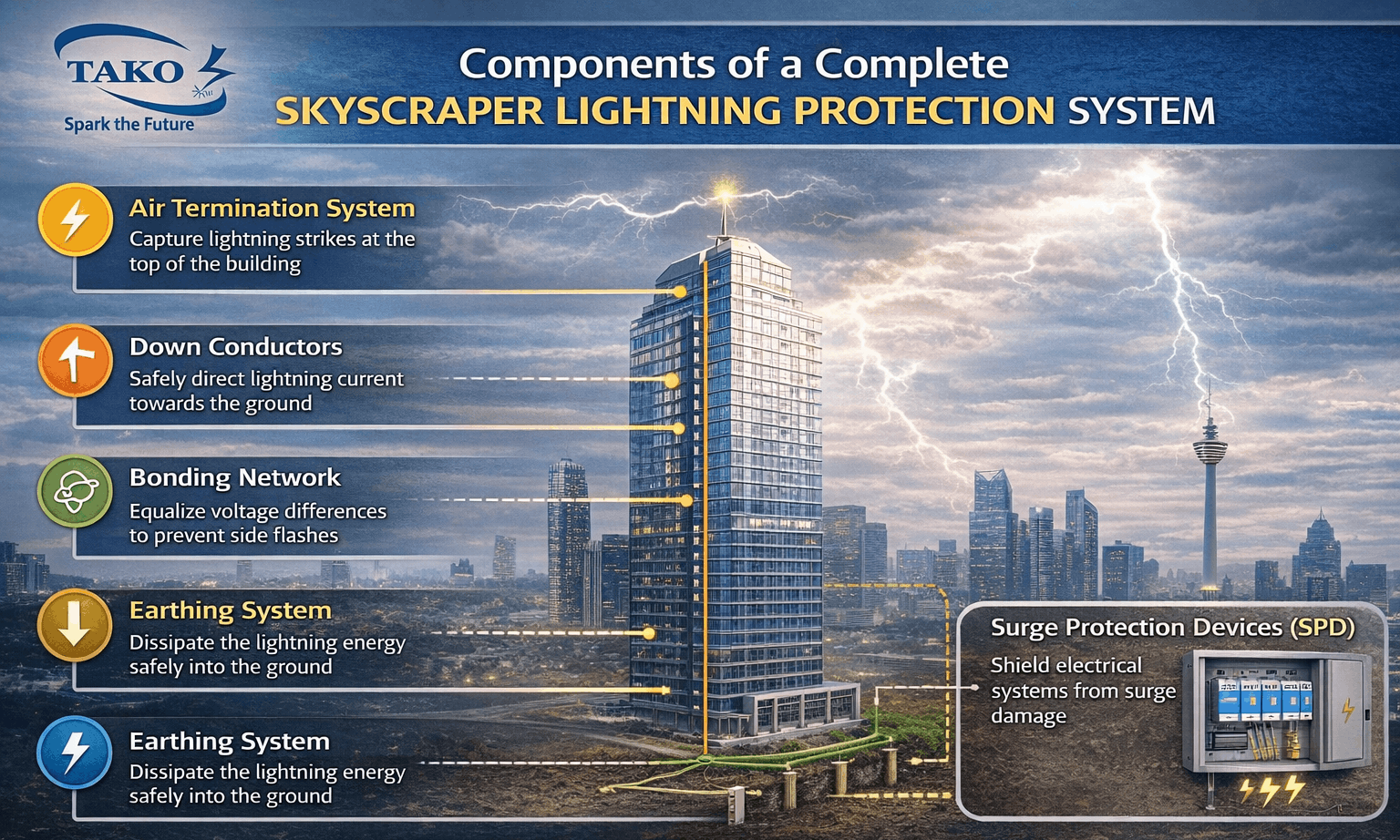
Total Safety: From the Roof to the Socket
While the Lightning Air Terminal protects the outside (and occasionally supports tired rock climbers), what protects the inside?
When lightning strikes a building, the energy doesn’t just disappear; it can create massive electrical surges that travel through wiring, destroying computers, servers, and machinery. This is why external protection is only half the battle.
What exactly was Alex Honnold holding at the very top of Taipei 101?
Alex Honnold was holding the building’s Lightning Air Terminal, commonly known as a lightning rod. This metal spire is the highest point of the structure, designed specifically to intercept lightning strikes. It captures the electrical discharge and safely channels it down to the ground through a network of conductors, preventing damage to the skyscraper.
Is it safe to touch a Lightning Air Terminal like Alex Honnold did?
It is safe to touch only when there is no storm activity present. However, during a thunderstorm, that specific rod becomes the most dangerous point on the building. It is designed to conduct millions of volts of electricity. This highlights the importance of professional Skyscraper Lightning Protection—it keeps that dangerous energy controlled and away from people and structural elements.
Does every building in Malaysia need the same protection as Taipei 101?
While not every building needs the massive system found on a 101-story tower, Malaysia is one of the world’s “lightning capitals” with very high thunderstorm frequency. Whether it is a residential home, a factory, or an office block, having a tailored Lightning Protection System in Malaysia is essential to prevent fire and structural damage.
Will a lightning rod on the roof protect my computers and electronics inside?
No, the external rod only protects the structure itself. To protect internal electronics (like computers, servers, and machinery) from electrical spikes caused by lightning, you need Telebahn Surge Protection Devices. As the sole distributor of Telebahn in Malaysia, TAKO installs these devices to stop surges from traveling through your power lines and frying your equipment.
Final Thought
The image of Alex Honnold atop Taipei 101 is unforgettable—but the lesson behind it is clear:
Air terminals protect buildings, not people who touch them.
In Malaysia’s high-lightning environment, skyscraper lightning protection must be designed with science, installed with precision, and respected at all times.
That’s the safety-first reality behind the image.

