

What is a Copper Lightning Arrester?
A Copper Lightning Arrester in Malaysia is a high-conductivity safety device installed at the highest point of a structure. Its primary job is to intercept a lightning strike and provide a low-resistance path for the electrical current to travel safely into the ground, bypassing the building’s structure and sensitive electrical systems. Because copper has a 100% IACS (International Annealed Copper Standard) conductivity rating, it is the most efficient material for discharging massive atmospheric electrical surges without melting or failing.
Securing a high-value industrial or commercial facility requires an absolute, MS IEC 62305 compliant lightning protection system engineered to eliminate risk and effortlessly pass strict safety audits. By utilizing our proprietary Lightning Risk Assessment Software, our engineering team maps out precise strike vulnerability grids customized to your site’s physical footprint. To ensure your infrastructure is structurally protected against transient surges, we are currently extending a comprehensive Free Site Visit Offer for manufacturing complexes and corporate operators.
TAKO since 1979 has over 25+ years of Experience in offering MS IEC 62305 Compliant Best Lightning Protection System in Malaysia.


Why Copper? The Science of Superior Protection
While there are many materials on the market, copper remains the undisputed king of lightning protection. In this guide, we’re going to dive deep into why a Copper Lightning Arrester is your best bet, the technical science behind it, and—crucially—how to install lightning rod systems correctly to ensure 100% safety.
If you’ve looked at cheaper alternatives like galvanized iron or aluminum, you might wonder if the investment in a Copper Lightning Arrester is worth it. From an engineering perspective, the answer is a resounding yes.
1. Unrivaled Conductivity
Lightning wants the path of least resistance. Copper offers exactly that. Compared to aluminum, copper is significantly more conductive, meaning it can handle a higher current density in a smaller diameter. When a strike hits a Copper Lightning Arrester, the metal manages the thermal energy far more effectively than other materials.
2. Corrosion Resistance: The “Set it and Forget it” Factor
Lightning protection systems are exposed to the worst of the elements—rain, salt air, and extreme heat. Aluminum can oxidize and lose its effectiveness, and galvanized steel will eventually rust. A Copper Lightning Arrester develops a protective patina over time but maintains its internal structural integrity for decades.
3. Thermal Stability
A lightning bolt is hot—hotter than the surface of the sun. Copper has a high melting point and excellent thermal dissipation properties. This ensures that your Copper Lightning Arrester doesn’t deform or shatter during a high-intensity discharge.

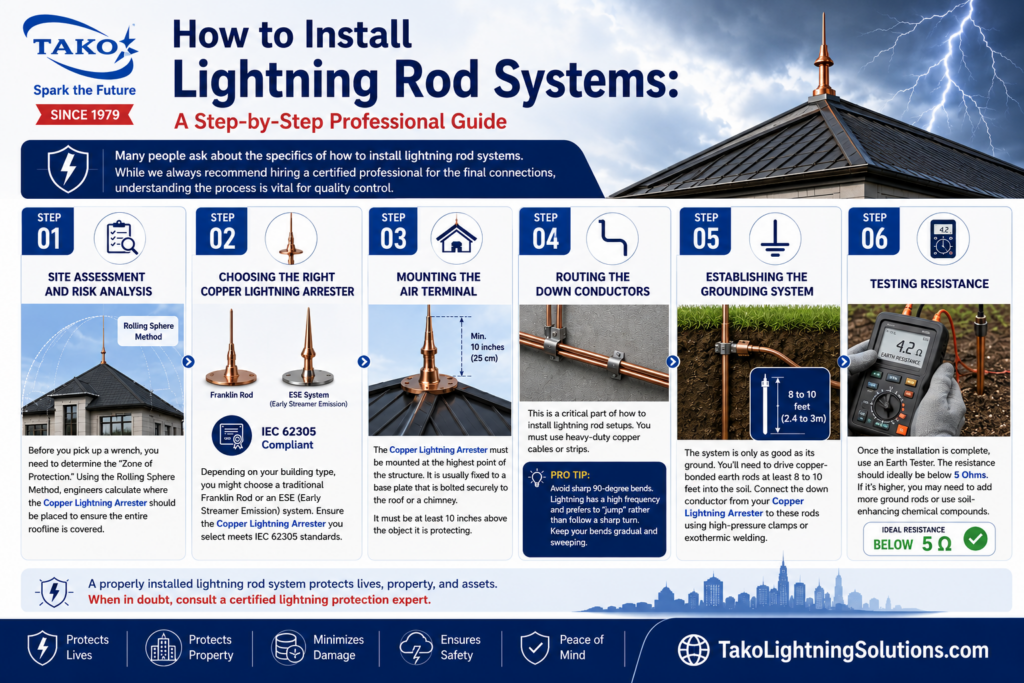
How to Install Lightning Rod Systems: A Step-by-Step Professional Guide
Many people ask about the specifics of how to install lightning rod systems. While we always recommend hiring a certified professional for the final connections, understanding the process is vital for quality control.
Here is the professional workflow for a standard installation:
Step 1: Site Assessment and Risk Analysis
Before you pick up a wrench, you need to determine the “Zone of Protection.” Using the Rolling Sphere Method, engineers calculate where the Copper Lightning Arrester should be placed to ensure the entire roofline is covered.
Step 2: Choosing the Right Copper Lightning Arrester
Depending on your building type, you might choose a traditional Franklin Rod or an ESE (Early Streamer Emission) system. Ensure the Copper Lightning Arrester you select meets IEC 62305 standards.
Step 3: Mounting the Air Terminal
The Copper Lightning Arrester must be mounted at the highest point of the structure. It is usually fixed to a base plate that is bolted securely to the roof or a chimney. It must be at least 10 inches above the object it is protecting.
Step 4: Routing the Down Conductors
This is a critical part of how to install lightning rod setups. You must use heavy-duty copper cables or strips.
- Pro Tip: Avoid sharp 90-degree bends. Lightning has a high frequency and prefers to “jump” rather than follow a sharp turn. Keep your bends gradual and sweeping.
Step 5: Establishing the Grounding System
The system is only as good as its ground. You’ll need to drive copper-bonded earth rods at least 8 to 10 feet into the soil. Connect the down conductor from your Copper Lightning Arrester to these rods using high-pressure clamps or exothermic welding.
Step 6: Testing Resistance
Once the installation is complete, use an Earth Tester. The resistance should ideally be below 5 Ohms. If it’s higher, you may need to add more ground rods or use soil-enhancing chemical compounds.
Types of Copper Lightning Arresters in Malaysia
Not all arresters are created equal. Depending on your specific needs, you’ll encounter these three main types:
- Conventional Copper Spike: The classic “pointed rod” seen on many homes. Simple, effective, and durable.
- ESE (Early Streamer Emission) Copper Lightning Arrester: These are “active” rods. They ionize the air around them to “attract” the lightning strike to the rod sooner than a conventional rod would, providing a much larger radius of protection.
- Multi-Point Discharge Rods: Used primarily in industrial settings where the goal is to dissipate static charge before a strike even occurs.
Copper vs. Aluminum: The Real Cost of “Cheap”
I’ve seen many facility managers try to save 20% by opting for aluminum over a Copper Lightning Arrester. Here is why that’s usually a mistake:
- Galvanic Corrosion: If you connect aluminum to other metal parts of a building without specialized bi-metal connectors, it will corrode. A Copper Lightning Arrester is much more compatible with the brass and bronze fittings used in high-end electrical work.
- Durability: In coastal areas, aluminum pits and becomes brittle within 5–10 years. A Copper Lightning Arrester can easily last 50 years with minimal maintenance.
- Safety Margin: When it comes to 300 million volts, you don’t want “just enough” conductivity. You want the best.
Maintenance: Keeping Your Copper Lightning Arrester in Peak Condition
Just because copper is durable doesn’t mean you should ignore it. We recommend an annual “post-storm season” inspection.
- Check for Loose Connections: Wind and vibration can loosen the clamps holding your Copper Lightning Arrester in place.
- Inspect for “Side Flashing”: Look for any signs of charring on the building structure, which might indicate that the lightning jumped from the conductor to the building.
- Verify Ground Resistance: Soil conditions change. A ground that was 4 Ohms last year might be 15 Ohms this year if the water table has shifted.
Knowing how to install lightning rod systems is only half the battle; keeping them maintained is what actually saves lives.
Industry Applications: Why Every High-Value Asset Needs a Copper Lightning Arrester
Whether you are managing a data center or a suburban home, the risks of a strike are real.
- Data Centers: A strike doesn’t even have to hit the building to cause damage. The EMP (Electromagnetic Pulse) can fry servers. A robust Copper Lightning Arrester helps channel that energy away instantly.
- Industrial Plants: If you have flammable chemicals or high-voltage machinery, a Copper Lightning Arrester is a non-negotiable safety requirement for insurance compliance.
- Residential Luxury Homes: Modern homes are packed with smart technology. One strike can cause tens of thousands of dollars in hidden electrical damage.
Common Myths About Lightning Protection in Malaysia
- “Lightning never strikes the same place twice”: This is dangerously false. Tall buildings are struck multiple times a year.
- “A lightning rod attracts lightning”: No, the Copper Lightning Arrester does not “pull” lightning out of the sky. It simply provides a safe path for a strike that was already going to happen.
- “I have surge protectors, so I’m safe”: Surge protectors handle small spikes from the power grid. They will literally explode if a direct lightning strike hits your house. You need a Copper Lightning Arrester to handle the exterior strike and surge protectors to handle the internal leftovers.
Technical Standards to Look For in Malaysia
When purchasing your Copper Lightning Arrester, don’t just buy the cheapest rod on Amazon. Look for these certifications:
- UL 96A: This ensures the rod and the installation meet North American safety standards.
- IEC 62305: The international benchmark for lightning protection.
- NFC 17-102: Specifically for ESE-type Copper Lightning Arrester systems.
Best Copper Lightning Arrester in Malaysia
TAKO is the leading lightning arrester Supplier Malaysia. It offers exclusive copper lightning arrester in Malaysia price. But the copper lightning arrester in Malaysia cost varies from hundreds to thousands.
Conclusion: Don’t Leave Your Safety to Chance
Investing in a Copper Lightning Arrester is about more than just buying a piece of metal. It’s about peace of mind. When the clouds turn black and the thunder starts to roll, you want to know that your property is protected by the best materials and the best engineering possible.
By following the steps on how to install lightning rod systems correctly and choosing high-grade copper, you are making a one-time investment that will protect your family, your equipment, and your structure for a lifetime.
Ready to Protect Your Property?
Don’t wait for the next big storm to realize you’re unprotected. Our team of experts specializes in high-conductivity Copper Lightning Arrester solutions and professional installations.
Credentials & Awards of TAKO since 1979


Disclaimer
The information provided in this blog on Copper Lightning Arrester is intended for general informational purposes only. Prices, specifications, and availability may vary depending on suppliers, location, and market conditions. Readers should verify details directly with suppliers or manufacturers before making purchasing decisions. The author and website are not responsible for any errors, omissions, or outcomes resulting from the use of this information. Always consult a professional for advice tailored to your specific needs.
Scan the QR to Contact TAKO Expert


