

Whole House Surge Protection / Building Surge Protection- What is it?
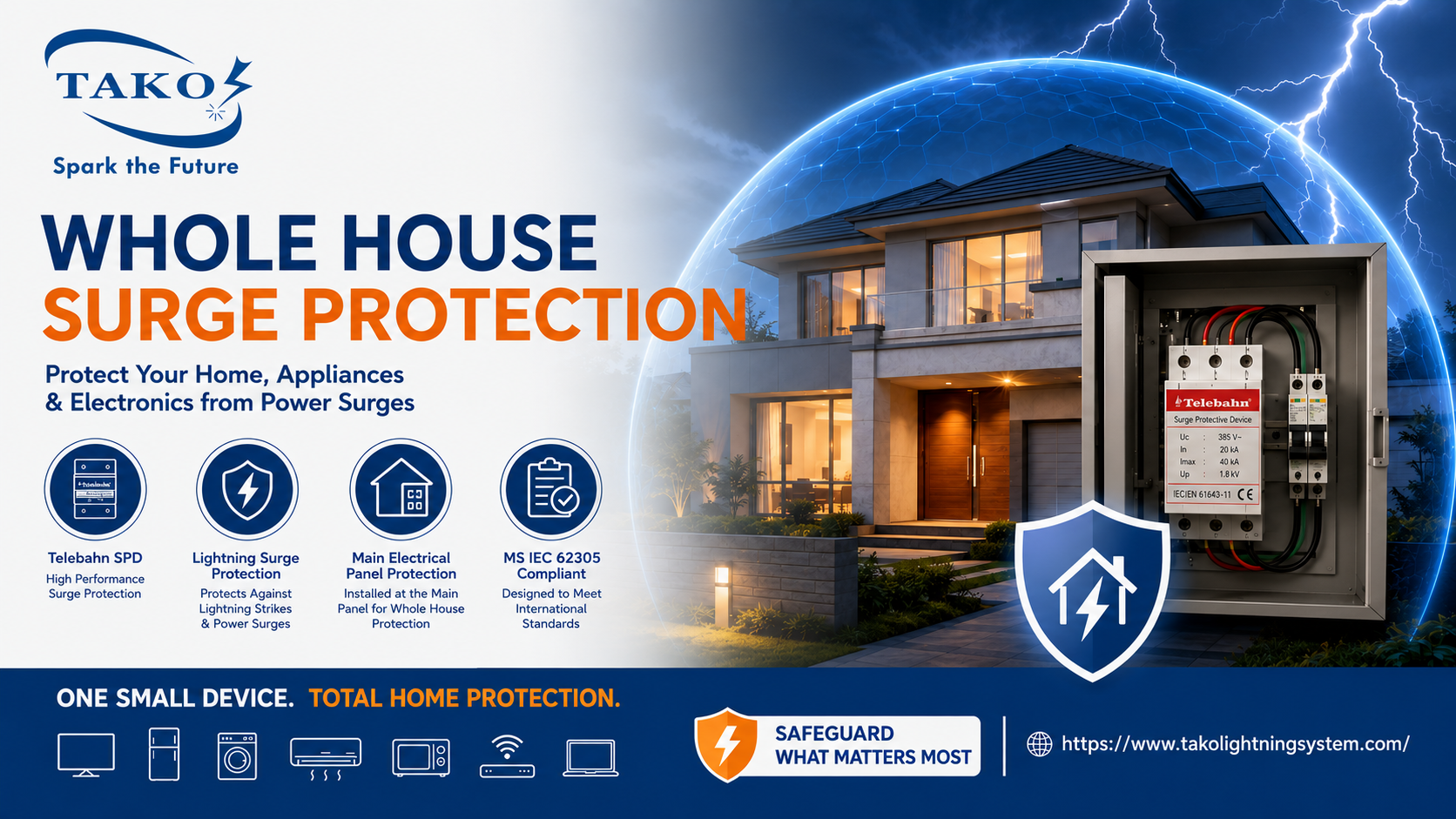
Whole house surge protection is a defensive device installed at your home’s main electrical panel that acts as a gatekeeper, shielding all of your circuits from damaging power surges. It is essential because modern homes are filled with sensitive electronics and microprocessors—not just in computers and TVs, but also in major appliances like refrigerators, washing machines, and HVAC systems.
While many people think of surges only from dramatic events like lightning strikes, the vast majority are smaller, internal surges created when large appliances cycle on and off. These constant, smaller spikes can degrade electronic components over time, leading to premature failure. By diverting excess voltage safely to the ground before it can enter your home’s wiring, a whole house surge protector provides a crucial, comprehensive first line of defense, safeguarding your expensive investments and preventing the widespread damage a single surge can cause.

Why Your Smart Home is Incomplete Without Whole House Surge Protection
You’ve invested time and money creating a seamless smart home. Your lights dim with a voice command, your thermostat anticipates your needs, and your security cameras offer peace of mind. But what protects this intricate web of expensive electronics? While you may have a few devices plugged into power-strip surge protectors, your smart home’s biggest vulnerability is hiding in plain sight: its connection to the power grid.
The silent threat isn’t just a massive lightning strike; it’s the constant barrage of small, invisible “micro-surges.” These tiny voltage spikes, caused by everything from the utility company switching grids to your own HVAC system kicking on, slowly degrade the sensitive microprocessors inside your IoT devices. This leads to glitches, shorter lifespans, and eventual failure.
Two Layers of Defense: Which Do You Have?
Protecting a smart home requires a two-pronged approach. Most people only have the second line of defense, leaving their most critical systems exposed. Click below to see the difference.
The Common Approach: Limited Protection
These are the familiar power strips you buy at the store. They are essential for protecting specific, high-value electronics like your entertainment center or home office computer.
- What they do: Stop surges that reach the outlet they’re plugged into.
- The Weakness: They do nothing for the rest of your home. Your hardwired smart switches, smart thermostat, expensive smart refrigerator, and even the central hub or router (if not on a strip) are completely unprotected. They are the last line of defense, not the first.
The Complete Shield: Foundational Security
A whole house surge protection system is the definitive solution for a smart home. Installed directly at your electrical panel, it acts as a gatekeeper for all incoming power.
- What it does: It stops and diverts the vast majority of external power surges—including micro-surges—at the source, before they can even enter your home’s wiring.
- The Strength: This protects every single device in your home, both plugged-in and hardwired. Your smart lighting, appliances, HVAC system, and security cameras all receive a critical layer of defense. A proper whole house surge protection strategy is the single best investment to preserve your smart home ecosystem.
Animated Infographic: How a Surge Damages Your Home
See the difference for yourself. First, watch how a surge travels through an unprotected home. Then, click the button to see how whole house surge protection saves the day.
Case Studies: When Smart Homes Fail
These scenarios happen more often than you’d think. A robust whole house surge protection system could have prevented them entirely.
Case #1: The Cascading Failure
A nearby transformer blew, sending a powerful surge down the line. The homeowner thought they were safe because their TV was on a surge protector strip. However, the surge fried their unprotected internet router. Instantly, their entire smart home went “dumb”—no smart lights, no security camera feeds, no voice assistants. It took days and a $200 replacement router to get everything back online.
Lesson: The brain of your smart home (the router) is one of its most vulnerable points.
Case #2: The Slow Decline
Over 18 months, a family noticed their smart light switches became unresponsive and their smart thermostat needed frequent reboots. They blamed buggy software and considered replacing the expensive devices. An electrician later identified the real cause: years of micro-surges from the grid had slowly cooked the delicate internal electronics, causing permanent damage.
Lesson: Damage from surges isn’t always instant and catastrophic. It’s often a slow, silent killer of your expensive tech.
Investing in a smart home is an investment in convenience, security, and efficiency. To truly protect that investment, whole house surge protection isn’t just a feature—it’s a necessity. It provides a foundational shield that point-of-use protectors simply can’t match, ensuring your connected home stays connected for years to come.

The Truth About DIY Whole-House Surge Protectors (When You’re Playing With Fire)
With a quick search online, you’ll find plenty of videos showing how to install a whole house surge protection device yourself. It seems simple enough: buy a unit for $100-$300, connect a few wires, and you’re done, saving hundreds on an electrician. But is it really that straightforward? Working inside your home’s main electrical panel is one of the most dangerous DIY jobs you can attempt.
A Word of Caution from the Pros
Even with the main breaker off, the main lugs where power enters your panel from the street are always live. A single slip of a tool or an accidental touch can be fatal. This isn’t just about saving money; it’s about understanding the very real risks involved.
DIY vs. Professional: A Head-to-Head Comparison
Let’s break down the real-world costs and risks. Click each option to see the full picture.
The DIY Route
- Cost: $80 – $300 for the device itself.
- Pros: Significant cost savings are the main driver. You can work on your own schedule.
- Cons: EXTREME RISK of electrocution, fire from improper connections, and voiding your homeowner’s insurance if something goes wrong. An incorrect installation can make the whole house surge protection ineffective, providing a false sense of security.
- Verdict: Only for highly experienced individuals who are fully comfortable and knowledgeable about working in a live electrical panel.
The Professional Route
- Cost: $300 – $700+ (includes the device and labor).
- Pros: Installation is safe, correct, and compliant with all local electrical codes. The work is insured and guaranteed. The electrician can assess your panel and recommend the correct device for your specific needs. Peace of mind is the biggest benefit.
- Cons: Higher upfront cost. You’ll need to schedule an appointment.
- Verdict: The highly recommended option for over 99% of homeowners. It’s the only way to guarantee your whole house surge protection is installed safely and effectively.
Interactive Flowchart: Should You DIY This Job?
Answer these questions honestly to see if you’re a candidate for a DIY install. Your safety depends on it.
Ready to see if a DIY install is right for you? This guide will walk you through the critical safety checks.
Question 1/3: Are you 100% comfortable opening your main panel and working near lugs that may be live, even with the main breaker off?
Question 2/3: Do you know your local electrical codes for breaker size, wire gauge, and proper placement for an SPD (Surge Protective Device)?
Question 3/3: Do you own and know how to properly use a voltage tester (multimeter) and insulated tools for electrical work?
Based on your answer, this job carries significant risk. For your safety and to ensure your system is protected correctly, professional installation is the right choice.
You have the foundational knowledge. Proceed with extreme caution, double-check everything, and if you have any doubt, stop and call a professional. Your safety is paramount.
Surge Protection for Vintage Homes: Safeguarding Your Ungrounded Wiring
Living in an older home has a unique charm, but it also comes with unique challenges, especially when it comes to the electrical system. If your home has knob-and-tube wiring or ungrounded two-prong outlets, you might think you’re out of luck for modern electronics protection. Standard surge protector strips often provide a false sense of security, as their most critical feature—the connection to a ground wire—is missing.
Expert Insight: A Common Misconception
“The biggest mistake I see is homeowners either doing nothing, or plugging a $50 surge strip into a two-prong adapter and hoping for the best,” says a licensed electrician specializing in historic homes. “The truth is, you can and absolutely should protect your home, but it starts at the panel, not the outlet.”
Your Wiring Type and Its Risks
Not all old wiring is the same. Click on the tabs below to understand the specific challenges your home might face and why a panel-based solution is so critical.
Knob-and-Tube Wiring
This early wiring system uses ceramic knobs and tubes to run wires through walls. Its main drawback is the lack of a ground wire and insulation that can become brittle over time. While a full rewire is the ideal long-term solution, a professionally installed whole house surge protection device at the main panel can still provide a crucial layer of defense by managing voltage between the hot and neutral wires before it travels through your fragile system.
Ungrounded Two-Prong Outlets
Even if your home was rewired from knob-and-tube, you may still have ungrounded circuits ending in two-prong outlets. Plugging a standard surge protector strip into these outlets (even with an adapter) renders its surge protection feature useless. Protection must be established “upstream” at the electrical panel, making whole house surge protection the only viable option for these circuits.
The GFCI “Fix” – A Common Confusion
Electricians often replace two-prong outlets with GFCI (Ground Fault Circuit Interrupter) outlets for safety. This is a vital upgrade to protect people from electric shock. However, a GFCI offers zero protection against power surges. It is designed to detect imbalances in current and shut off power to prevent electrocution; it does nothing to stop a high-voltage spike from frying your sensitive electronics.
Animated Demo: How Surge Protection Works Without a Ground
So, if there’s no ground wire, where does the surge go? A modern Surge Protective Device (SPD) installed at your panel performs a critical function called “clamping.” Click the button to see it in action.
As the animation shows, the whole house surge protection device instantly clamps the dangerous voltage spike between the hot and neutral lines, neutralizing the threat before it can reach and destroy your appliances. While a ground wire provides an additional path for dissipation, this primary clamping action is what saves your electronics.
For owners of vintage homes, investing in a professionally installed whole house surge protection system isn’t just a good idea—it’s the most effective and responsible way to bring modern electrical safety to a classic property. Always consult with a licensed electrician experienced with older homes to select and install the correct device.

Why Climate Change Is Spiking Your Surge Risk (And What to Do Before the Next Storm)
The link between extreme weather and your home’s safety is becoming clearer every year. As hurricanes, wildfires, and heatwaves intensify, they put unprecedented stress on our aging power grid. This instability leads to more frequent and powerful electrical surges that can destroy the sensitive electronics you rely on every day.
The Data Doesn’t Lie: Surges Follow Storms
Insurance industry data shows that claims for surge-related damage to electronics can spike by over 20% in the weeks following a major weather event. The crucial takeaway is that most of this costly damage is entirely preventable with the right preparation.
The New Weather Threats to Your Electronics
Click each weather event below to see how it directly increases your home’s risk from power surges.
Hurricanes, Tornadoes & Thunderstorms
Intense storms bring the obvious risk of direct lightning strikes. But a far more common threat comes after the storm passes. When utility crews work to restore power to a damaged area, the re-energizing of the grid can send massive, unpredictable surges down the line, overwhelming standard power strips and damaging appliances.
Wildfires & Public Safety Power Shutoffs
In high-risk fire zones, utilities now use Public Safety Power Shutoffs (PSPS) to prevent equipment from starting a blaze. These frequent on-off cycles are a major source of damaging micro-surges that degrade electronics over time. A comprehensive whole house surge protection system is vital for homes in these areas to guard against this constant electrical stress.
Heatwaves & Deep Freezes
Extreme temperatures force the grid to its breaking point. Record demand from air conditioners or electric heaters can lead to rolling blackouts. Each time the power cycles back on, it creates a potentially damaging surge throughout your home. This makes whole house surge protection a key part of climate resilience for any modern household.
Animated Demo: Visualizing Grid Instability
Our power grid was built for a predictable climate. See how modern weather puts it—and your unprotected home—at risk. Then, see how the right defense works.
As our climate continues to change, the stability of the power grid can no longer be taken for granted. Proactively installing whole house surge protection is one of the most effective upgrades you can make for home resilience. It’s no longer just about protecting against a rare lightning strike; it’s about creating a permanent shield against the daily realities of a stressed electrical grid.
Your Surge Protector Is Expiring (Here’s How to Check Before It Fails)
A common misconception about surge protectors is that they last forever. In reality, these devices are the unsung heroes of your home’s electrical system, sacrificing themselves to absorb damaging voltage spikes. Every surge they block, big or small, wears them down. This means your whole house surge protection system has a finite lifespan and requires regular checks to ensure it’s still doing its job.
Think of Joules as a “Health Bar”
Every surge protector has a “Joule rating,” which is the total amount of energy it can absorb before it fails. Think of this rating as a health bar in a video game. Each surge is a “hit” that depletes this health. Once the Joules are used up, the device may still pass power to your home, but it no longer offers any protection.
What Affects Your Surge Protector’s Lifespan?
Several factors determine how quickly your device wears out. Click each factor to learn more.
Frequency and Intensity of Surges
A home in an area with frequent thunderstorms or an unstable power grid will wear out its surge protector much faster. A single major event, like a nearby lightning strike, can exhaust a device’s entire capacity in an instant. Countless smaller “micro-surges” from the grid or internal appliances also chip away at its lifespan over time.
The Initial Joule Rating
A whole house surge protection device with a higher Joule rating (e.g., 3,000+) has a larger “health bar” and can withstand more or larger surges than a device with a lower rating. While more expensive upfront, a higher-rated device generally offers a longer effective service life and better protection.
Age and Environment
Even in a home with very few surges, the internal components (called Metal Oxide Varistors or MOVs) degrade over time. Most manufacturers recommend replacing your whole house surge protection unit every 5 to 10 years, regardless of surge activity. Extreme heat or humidity in areas like attics or garages can also accelerate this degradation.
Animated Demo: Visualizing a Surge Protector’s Decline
Watch how different types of power surges affect your protector’s “health bar” and status light.
Device Status
How to Check: Look for the Light
The easiest way to check the status of your surge protector is to look at its indicator lights. Most professionally installed units have LEDs visible on the device itself.
- 🟢 Green Light: All systems go. The device is powered on and providing protection.
- 🔴 Red, Orange, or No Light: This is a warning. It typically means the protective components have been used up. Your home is no longer protected, and the unit must be replaced immediately.
Surge Protection for Renters: How to Protect Your Gear (Without Modifying Your Apartment)
As a renter, you’ve invested thousands in your computer, TV, and smart devices. But what happens when a power surge hits? You can’t drill into walls or modify the electrical panel, so is a cheap power strip your only option? Fortunately, you have better ways to protect your property, even without permanent installations.
The Renter’s Catch-22
A true whole house surge protection system installed at the panel is the gold standard, but it requires an electrician and your landlord’s permission. Landlords may be hesitant to approve modifications, leaving you to find your own solution. This guide explores the powerful, non-permanent options available to you.
Your Protection Playbook: From Talking to Tech
Protecting your electronics as a renter requires a layered strategy. Click each option below to explore your best moves.
Animated Demo: Basic Strip vs. Robust Protector
See why spending a bit more on a point-of-use surge protector makes a huge difference. Click the buttons to simulate a power surge.
While you may not be able to install a traditional hardwired system, you are not powerless. By choosing high-quality point-of-use devices and understanding the technology, you can build a formidable defense for your electronics. This approach provides a practical alternative to a full whole house surge protection system, giving you peace of mind in your rental home.
Off-Grid Danger: Why Your System Needs Surge Protection (Even Without the Grid)
Living off-grid provides incredible freedom, but it doesn’t free you from the risk of power surges. In fact, your self-contained power system—the very heart of your independence—is uniquely vulnerable to threats that grid-tied homes don’t face. A single event can fry your expensive inverter or damage your battery bank, leaving you completely in the dark.
Tiny Home Builder’s Warning
“We see it all the time,” a tiny home builder told us. “People spend a fortune on solar panels and batteries but skip the surge protection. The first major thunderstorm or a generator misfire, and their inverter is toast. It’s the most costly, preventable failure in an off-grid setup.”
Your Off-Grid Threats Are Different
Forget what you know about grid instability. Your dangers are closer to home. Click on each threat to understand your system’s unique vulnerabilities.
Lightning: The Obvious Danger
Your solar array, often placed in an open area, is a natural lightning rod. Even a nearby strike can induce a massive voltage surge on the DC (Direct Current) side of your system. This high-voltage DC surge travels down the cables directly to your charge controller and inverter, two of the most expensive components you own. A proper DC surge protector is non-negotiable for any solar array.
Generator Start-up Spikes
Your backup generator is a lifesaver, but it can also be a liability. When a powerful generator kicks on, it can create a significant AC (Alternating Current) voltage spike. This surge hits your inverter and transfer switch first, and can then travel to every appliance in your home. A robust whole house surge protection device on the AC side is crucial to tame these spikes.
Internal Surges from Heavy Loads
Even your own equipment can be a threat. Large motors in devices like well pumps or workshop tools can create internal surges when they switch on and off. In a small, closed system, these spikes can cause recurring stress on sensitive electronics. A complete whole house surge protection strategy helps absorb these internal events, protecting the entire system.
Animated Demo: The Two Shields Your System Needs
A complete off-grid system requires two types of protection: DC protection for your solar array and AC protection for your living space. See how they work together.
For an off-grid or tiny home, your power system is your lifeline. Protecting it isn’t a luxury; it’s essential for reliability and longevity. A complete strategy, combining both DC-rated devices for your solar and a quality AC whole house surge protection unit for your main panel, is the only way to truly secure your independence.
Protect Your $50K EV—Why Your Charger Needs Whole-House Surge Protection
You’ve made a smart investment in an electric vehicle, but the most crucial part of your daily routine—your home EV charger—is a sitting duck for power surges. A Level 2 charger is a high-draw appliance directly connected to your main panel, making it a primary pathway for damaging voltage spikes that can destroy the charger’s sensitive electronics and even travel to your car’s expensive battery management system.
The Hidden Cost of a Power Surge
A fried EV charger (EVSE) can cost $500 to $1,500 to replace, not including labor or the potential for damage to your vehicle’s onboard charging components. This risk is why more EV owners are looking beyond basic protection and considering a more robust solution.
Dedicated Protector vs. Whole House: Which is Right for You?
You have two main options to protect your investment. Click below to see how they stack up.
Dedicated EV Surge Protector
This is a surge protective device (SPD) installed specifically for the circuit that powers your EV charger.
- Pros: Offers targeted, robust protection for your most expensive appliance. It’s a good solution if protecting only the EV charger is your goal.
- Cons: It does nothing to protect the rest of your home. Your computers, smart home devices, and other major appliances remain vulnerable to the same surge that could have targeted your EV. It protects one branch, not the whole tree.
Whole House Surge Protection
This is a single, powerful SPD installed at your main electrical panel, acting as a gatekeeper for all incoming power.
- Pros: It protects your EV charger and every other electronic device in your home simultaneously. It’s the most comprehensive solution, stopping surges at the source before they can travel down any circuit. A proper whole house surge protection system is often more cost-effective than buying multiple high-end dedicated protectors.
- Cons: Typically requires professional installation by a licensed electrician.
Animated Demo: How a Surge Threatens Your EV
Watch what happens when a surge from the grid hits your home’s electrical system, and see how the right protection makes all the difference.
Given the high electrical draw and the direct connection to your home’s main panel, your EV charger is uniquely susceptible to damage. While a dedicated protector is better than nothing, a whole house surge protection system provides superior, all-encompassing security. Protecting your EV charger is important, but protecting your entire home is the smarter long-term investment. For complete peace of mind, a professionally installed whole house surge protection device is the clear winner.
Your Neighbor’s Blender Could Kill Your TV: An Apartment & Condo Surge Guide
When you live in a multi-family building, you share more than just walls and elevators—you share an electrical infrastructure. A power surge doesn’t have to come from a lightning storm; it can originate from a neighbor’s faulty appliance or from maintenance work on the building’s electrical system. This shared risk means your expensive electronics are constantly vulnerable in ways single-family homeowners never have to consider.
The Shared Grid Danger
A property manager for a large apartment complex explained, “We had a case where an air conditioner compressor failed in one unit, sending a surge across three other apartments on the same circuit. The tenants with no protection lost TVs and computers. It’s a huge point of contention because the damage wasn’t their fault, but it happened within their walls.”
Your Protection Options: From Your Outlet to the Whole Building
Even though you can’t control your neighbors, you can control your own defense. Your options depend on whether you rent or own. Click each scenario to see your best strategy.
For Renters: Your First and Best Defense
As a renter, your power lies at the outlet. Investing in high-quality point-of-use surge protectors for your valuable electronics is essential. This is more than a basic power strip; look for devices with high Joule ratings (2000+) and a connected equipment warranty. This creates a critical buffer between your gear and the unpredictable wiring of the building.
For Condo Owners: A Personal Protection System
If you own your condo, you likely have your own electrical sub-panel inside your unit. This is a game-changer. You can have a licensed electrician install a “Type 2” SPD directly in your panel. This device acts as a personal whole house surge protection system, guarding every single outlet and hardwired appliance in your unit from surges, whether they come from outside or from a neighboring apartment.
The Best Case: Advocating for Building-Wide Protection
The ultimate solution is a “Type 1” whole house surge protection system installed at the building’s main electrical service entrance. This protects every single unit from external surges, like lightning and utility switching. It’s a major asset that can prevent widespread damage and tenant disputes. Talk to your condo board or property manager about the benefits—it protects their investment in the building’s infrastructure (elevators, fire alarms) just as much as it protects your electronics.
Animated Demo: How a Neighbor’s Surge Travels
See what happens when a surge originates in one apartment and travels through the shared wiring to another.
Living in a multi-family building requires a proactive approach to electrical safety. While advocating for a building-wide whole house surge protection system is the ideal long-term goal, taking immediate steps to protect your own space is crucial. Whether you’re a renter using high-quality surge strips or a condo owner installing a sub-panel device, you can create a powerful shield against the unique risks of shared living.
How to Choose the Best Whole House Surge Protector for Your Home
The search for the best whole house surge protector can be overwhelming. With so many options, how do you know you’re getting the best whole house surge protector for your needs? This guide breaks down what makes the best whole house surge protector a worthy investment. Understanding these features is key to finding the best whole house surge protector.
What Defines the Best Whole House Surge Protector?
Click the tabs below to explore the essential features you should look for.
Joule Rating: The Device’s “Health Bar”
The Joule rating is the most critical spec. The best whole house surge protector will have a high rating, typically over 2,500 Joules. This ‘health bar’ determines how much energy it can absorb. A higher rating means you have the best whole house surge protector for longevity. Don’t settle for less when searching for the best whole house surge protector.
UL 1449 Certification: The Safety Standard
Safety is paramount. The best whole house surge protector is always UL 1449 certified. This means it has been rigorously tested for safety and performance. If a device isn’t UL listed, it’s not the best whole house surge protector, no matter the price. Always look for this mark to find the best whole house surge protector.
Warranty: A Sign of Confidence
A good warranty shows a company stands by its product. The best whole house surge protector often comes with a substantial connected equipment warranty. This offers peace of mind. While the ultimate goal is for the best whole house surge protector to prevent damage, a strong warranty is a feature of the best whole house surge protector.
See the Best Whole House Surge Protector in Action
This animation shows what happens when a surge hits your home, first without protection, and then with the best whole house surge protector installed. The difference the best whole house surge protector makes is clear.
Our Final Verdict on Finding the Best Whole House Surge Protector
Ultimately, the best whole house surge protector for you depends on your home’s needs and budget. A professional electrician can help you choose the best whole house surge protector. They understand the technical requirements for selecting the best whole house surge protector. Remember that the best whole house surge protector is an investment in your home’s safety. This search for the best whole house surge protector is more than just shopping; it’s about securing your assets. The best whole house surge protector protects everything.
So when you ask, ‘What is the best whole house surge protector?’, the answer involves looking at Joules, certifications, and warranties. Don’t delay in finding the best whole house surge protector. The best whole house surge protector is waiting to be installed.
Breaking Down the Whole House Surge Protection Cost
Understanding the whole house surge protection cost is the first step for many homeowners. When considering this vital upgrade, the question of the whole house surge protection cost often comes up. Let’s break down the whole house surge protection cost so you can budget effectively for this important investment. The final whole house surge protection cost is very reasonable.
What Goes Into the Total Whole House Surge Protection Cost?
Click the tabs below to explore the main components of the overall price.
The Device Itself
The device itself is the first part of the whole house surge protection cost. The range for the unit can vary, affecting the total whole house surge protection cost. A higher-spec device increases the initial whole house surge protection cost but offers better protection. The brand and features will influence this part of the whole house surge protection cost. Consider this when evaluating the overall whole house surge protection cost.
Professional Labor Cost
Labor is a significant factor in the whole house surge protection cost. Professional installation is key, and this service adds to the final whole house surge protection cost. The electrician’s rate will determine a large portion of the whole house surge protection cost. Don’t try to save on this part of the whole house surge protection cost by doing it yourself. A proper installation justifies the whole house surge protection cost.
Factors That Influence Cost
Several factors can alter the whole house surge protection cost. The age and complexity of your electrical panel can impact the whole house surge protection cost. If your panel needs upgrades, this will increase the total whole house surge protection cost. Geographic location also affects the average whole house surge protection cost. Be aware of these variables when budgeting for the whole house surge protection cost. They are a key part of the whole house surge protection cost.
Visualizing the Value vs. Cost
This animation visualizes the value behind the whole house surge protection cost. A small upfront whole house surge protection cost can prevent thousands in damages. Think of the whole house surge protection cost as an insurance policy. This makes the whole house surge protection cost an easy decision.
In summary, viewing the whole house surge protection cost as an expense is short-sighted. The true value lies in what it protects. When you factor in the potential for catastrophic loss, the whole house surge protection cost seems minimal. So while the initial whole house surge protection cost is a consideration, the long-term savings are immense. Your final decision on the whole house surge protection cost should weigh these benefits.

What is whole-house surge protection?
Whole-house surge protection is a system installed at your electrical panel (or meter) to protect all appliances and electronics in your home from voltage spikes caused by lightning, grid fluctuations, or large appliances cycling on/off. Unlike power strips, it stops surges before they enter your wiring.
Why it matters: A single surge can damage HVAC systems, smart home devices, and even solar inverters—costing thousands in repairs.
How does it differ from power strips or plug-in surge protectors?
Power strips: Only protect devices plugged into them (and often fail catastrophically during large surges).
Whole-house systems: Stop surges at the main electrical panel, safeguarding hardwired appliances (e.g., fridge, AC) and reducing strain on plug-in protectors.
Pro Tip: For best protection, use both whole-house and point-of-use surge protectors (like those for TVs or computers).
Can I install a whole-house surge protector myself?
Maybe—but it depends:
For DIYers: Some models clip into an open breaker slot (easy if your panel has space).
For complex setups: If your home has older wiring, solar, or a main panel with no space, hire an electrician.
Warning: Working inside an electrical panel can be deadly if done wrong. If unsure, always call a pro.
Do I need surge protection if I have solar panels or a battery system?
Yes! Solar panels and batteries increase your surge risk because:
Lightning can strike panels, sending surges through wiring.
Inverters are expensive and sensitive to micro-surges.
Look for: UL 1449-certified SPDs (Surge Protective Devices) rated for solar systems.
How long do whole-house surge protectors last?
Typical lifespan: 5–10 years (or after a major surge event).
Signs it’s failing: Status light turns red, frequent surges damage electronics.
Pro Tip: Write the installation date on the unit and check it after storms.
Will this protect my smart home devices?
Yes, but with caveats:
Whole-house SPDs block large surges, but smart devices can still be affected by smaller, frequent spikes.
For best results: Pair with smart plug surge protectors for sensitive gadgets (e.g., routers, hubs).
Does homeowners insurance cover surge damage?
Sometimes—but don’t count on it:
Many policies exclude surge damage or require proof you had “reasonable protection” (like an SPD).
Some insurers offer discounts for installing whole-house surge protection.
Key Move: Call your insurer and ask about their surge coverage before a disaster.
Are surge protectors worth it for older homes?
Absolutely—especially if your home has:
Knob-and-tube wiring (no ground wire): Use a “no-ground” compatible SPD.
Frequent brownouts/flickering lights: These strain electronics and indicate grid instability.
Note: An electrician can recommend solutions for vintage homes.
Can renters install whole-house surge protection?
Usually not (landlords control the main panel), but you can:
Ask the landlord to install one (highlight their liability risk).
Use heavy-duty plug-in surge protectors for high-value electronics.
Renter Hack: Look for portable surge protectors designed for RVs (works for apartments).
Do I need surge protection if I live in an area with few storms?
Yes! Surges also come from:
Utility company switching (e.g., power coming back after an outage).
Large appliances (e.g., AC units cycling on).
Neighbors’ electrical issues (in multi-family buildings).
Stats: 60–80% of surges originate inside your home.
What’s the cost of whole-house surge protection?
Unit cost: $50–$300 (for the SPD).
Installation: $200–$500 (if hiring an electrician).
Vs. replacement cost: A single fried HVAC system can cost $5,000+.
ROI: Pays for itself after one avoided disaster.
How do I know if my home already has surge protection?
Check your electrical panel for:
A dedicated breaker labeled “SPD” or “Surge Protector.”
A box near the meter (for utility-side installations).
Not sure? Snap a photo of your panel and ask an electrician.


Disclaimer
The information contained in this blog on Whole house surge protection & building surge protection is for informational and marketing purposes only and should not be taken as professional advice. Our focus is on providing comprehensive LPS total solution services including Whole house surge protection. This service encompasses a wide range of solutions to design, install, and maintain a complete lightning protection system tailored to your specific needs. For any questions related to Whole house surge protection or to discuss your specific lightning protection needs, please contact us directly.
TAKO’s Credentials


