
Lightning Arrester Systems Malaysia | MS IEC 62305 Certified
For complete Kota Kinabalu building lightning safety, protect your commercial, industrial, or residential property from catastrophic electrical damage and operational downtime with TAKO’s certified protection systems. Kota Kinabalu experiences some of the highest lightning-strike frequencies in Malaysia, putting critical assets at constant risk. Our engineered, MS IEC 62305-compliant systems deliver complete, audit-ready protection against multi-million Ringgit equipment failures and fire hazards. Contact our engineering team today to claim a free site visit before the next severe storm.
Protect your commercial & industrial property from direct strikes with MS IEC 62305-certified lightning arresters. Get a free RM380 site assessment today.
⚡ Kota Kinabalu Building Lightning Risk Calculator
Evaluate MS IEC 62305 compliance and protection requirements for your Sabah property.

Why Kota Kinabalu is a High-Risk Zone for Lightning Strikes
To develop an effective protection plan, one must first understand the enemy. Kota Kinabalu’s geographical and climatic conditions create a perfect storm for lightning activity.
- Tropical Convective Thunderstorms: Our location in the heart of Southeast Asia means we experience intense convective thunderstorms. The sun heats the land and sea, causing moist air to rise rapidly, forming massive cumulonimbus clouds—the very engines of lightning. These storms are particularly frequent during the inter-monsoon periods, but can occur year-round.
- Coastal Influence: Being a coastal city, KK is subject to sea breezes that converge with prevailing winds, forcing air upwards and further fuelling the development of powerful thunderclouds. The high humidity provides ample moisture, a key ingredient for electrical charge separation within these clouds.
- Economic and Urban Density: As Sabah’s economic hub, Kota Kinabalu is home to an increasing number of tall buildings, communication towers, and complex electrical grids. This urban landscape creates more potential strike points and increases the overall risk, making a city-wide focus on Kota Kinabalu building lightning safety a collective imperative.
How Lightning Can Damage Your Kota Kinabalu Building
A lightning bolt is a fleeting event, but its destructive pathways are multiple and often misunderstood. Understanding these is the second pillar of effective Kota Kinabalu building lightning safety.
1. The Direct Strike
This is the most obvious and violent form of damage. When a bolt makes direct contact with a structure, it delivers an immense amount of energy in microseconds. The result can include:
- Fire: The immense heat (hotter than the surface of the sun) can instantly ignite building materials, especially wood and other combustibles.
- Structural Damage: The explosive shockwave can shatter concrete, brick, and roofing materials, leading to costly repairs and potential structural compromise.
2. The Secondary Effects (The Silent Killers)
Often, a strike doesn’t have to hit your building directly to cause devastation. These secondary effects are why a comprehensive approach to Kota Kinabalu building lightning safety is critical.
- Ground Current: When lightning strikes the ground near a building, the electrical energy radiates outward. If this current enters your building’s grounding system or foundation, it can “jump” to internal wiring and plumbing, causing widespread damage and electrocution risks.
- Surges through Power Lines: A strike on a power line miles away can send a tidal wave of electricity—a surge—racing along the cables directly into your building. This will destroy anything plugged in, from refrigerators and air-conditioning units to computers and security systems.
- Surges through Data/Communication Lines: Modern buildings are networked. A surge entering through a telephone, fibre optic, or coaxial cable can fry modems, routers, servers, and any connected devices, leading to massive data loss and communication blackouts.
- Electromagnetic Pulse (EMP): The intense electromagnetic field from a nearby strike can induce high voltages in any internal wiring loop, even if it’s not directly connected to an external line, damaging electronics mysteriously and insidiously.
The Gold Standard: A Certified Lightning Protection System (LPS)
The only way to mitigate all these risks is with a professionally designed and installed Lightning Protection System (LPS). This is the cornerstone of all modern Kota Kinabalu building lightning safety strategies. Think of it as a designated, safe highway that guides the lightning’s destructive energy from the point of strike, harmlessly around and through the building, and into the ground.
A standards-compliant LPS consists of four key components, as outlined in the Malaysian Standard MS IEC 62305.
Component 1: The Air Termination System (Lightning Rods/Conductors)
This is the part most people picture—the lightning rods and strategic conductors placed on the roof and upper sections of the building. Its job is not to attract lightning, but to provide a preferred point of strike, intercepting the bolt before it can hit a less robust part of the structure. Proper placement is a science, crucial for effective Kota Kinabalu building lightning safety.
Component 2: The Down Conductors
Once intercepted, the massive electrical current needs a safe path to the ground. Down conductors are thick, durable cables that run vertically down the exterior of the building from the air termination system. A well-designed system will have multiple down conductors to share the load and provide redundancy, a key tenet of reliable Kota Kinabalu building lightning safety.
Component 3: The Earth Termination System (Grounding)
This is arguably the most critical part of the system. The goal is to dissipate the lightning’s energy safely into the earth. This involves a network of ground rods and plates buried deep in the soil. In some areas of Kota Kinabalu, where soil conductivity can be poor, special grounding enhancement materials may be required to achieve a low-resistance ground—a technical detail that highlights the need for local expertise in Kota Kinabalu building lightning safety.
Component 4: Equipotential Bonding
Lightning seeks the path of least resistance, and differences in electrical potential are what cause dangerous side-flashing (arcing) inside a building. Bonding involves electrically connecting all large metallic services—water pipes, gas lines, structural steel, and electrical grounds—to the LPS. This ensures that everything rises to the same electrical potential during a strike, preventing dangerous sparks and shocks inside the building and completing a holistic Kota Kinabalu building lightning safety solution.
📋 Kota Kinabalu Building Safety Audit Checklist
Check your building readiness against BOMBA & Suruhanjaya Tenaga standards:
The Critical Role of Surge Protection Devices (SPDs)
A crucial and often overlooked aspect of Kota Kinabalu building lightning safety is that an external LPS handles the direct strike, but it does not fully protect against the surges coming in via power and data lines. This is where Surge Protection Devices (SPDs) come in.
- Type 1 SPDs: These are installed at the building’s main electrical distribution board. They are designed to handle the very high-energy current from a direct strike or a very nearby strike that has entered the utility lines. They are the first line of defence for the entire electrical system.
- Type 2 SPDs: These are installed at sub-distribution boards (e.g., on each floor or for specific sensitive areas). They provide a second level of protection, clamping the voltage to a safer level and protecting individual circuits and appliances.
- Type 3 SPDs: These are point-of-use devices, like surge-protected power strips for individual computers or entertainment systems. They offer fine protection for the most sensitive devices.
For comprehensive Kota Kinabalu building lightning safety, a coordinated SPD installation—using Type 1, 2, and often 3 devices—is non-negotiable to protect your valuable electronic assets.
Ensuring Compliance and Quality in Kota Kinabalu
Given the high stakes, implementing Kota Kinabalu building lightning safety measures cannot be a haphazard or DIY endeavour. Quality and compliance are everything.
- Adherence to MS IEC 62305: This Malaysian adoption of the international IEC 62305 standard is the bible for lightning protection. Any reputable contractor must design and install systems in full compliance with this standard. Referencing it is a mark of true professionalism in Kota Kinabalu building lightning safety.
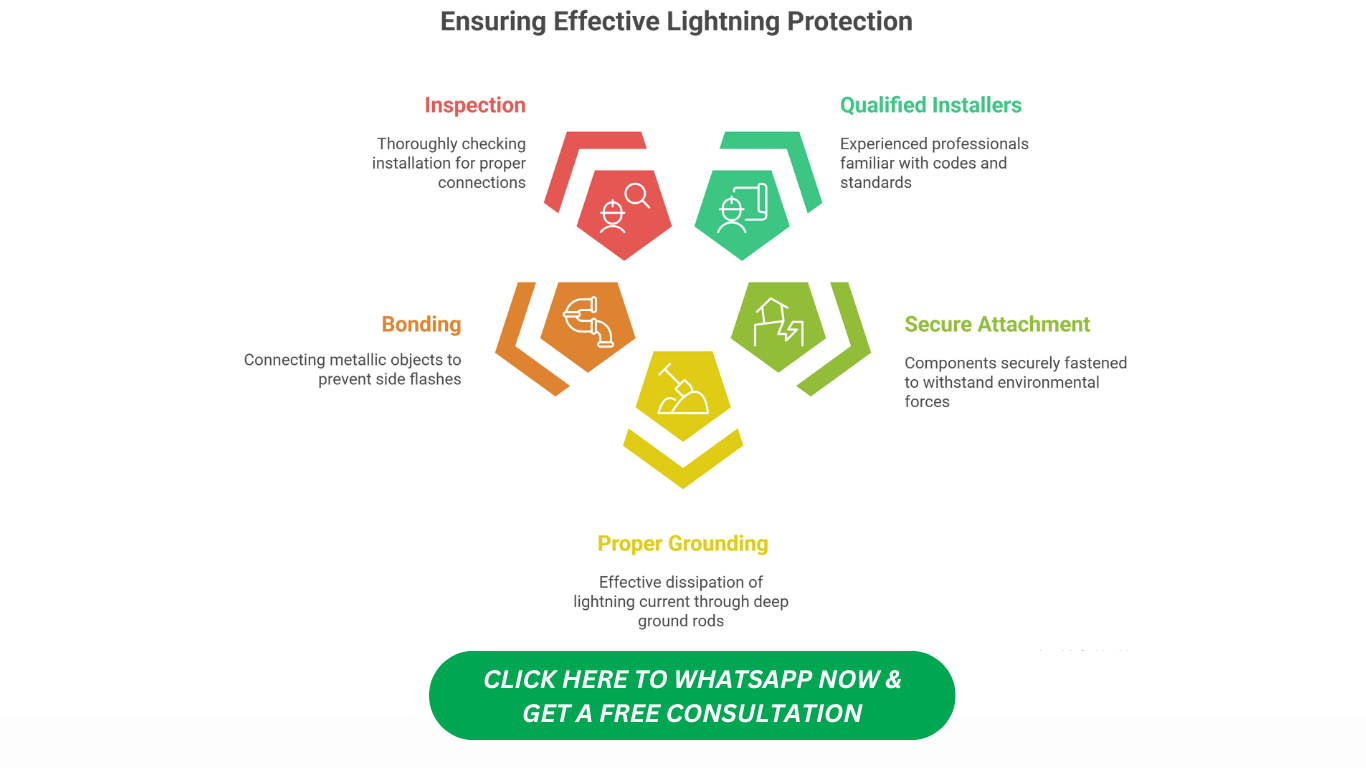
- The Non-Negotiable Need for Professional Installation: Installing an LPS involves high-voltage physics and structural engineering. It must be carried out by certified and licensed electrical engineers or contractors. These professionals understand the calculations for strike probability, conductor sizing, and grounding requirements specific to your building’s design and local soil conditions. This professional oversight is the bedrock of trustworthy Kota Kinabalu building lightning safety.
- Involvement of Local Authorities: Compliance often involves inspections and approvals from relevant bodies like the Suruhanjaya Tenaga (Energy Commission) to ensure electrical work meets national codes. Adhering to these regulations is a fundamental part of lawful and effective Kota Kinabalu building lightning safety.
- Regular Inspection and Maintenance: An LPS is a physical system exposed to the elements. Corrosion, loose connections, and soil erosion around ground rods can compromise its effectiveness. An annual inspection, preferably before the peak of the thunderstorm season, is a critical maintenance routine for ongoing Kota Kinabalu building lightning safety.
Lightning Safety Protocol: What to Do During a Storm
While a physical LPS protects the building itself, human safety protocols are equally important. A complete Kota Kinabalu building lightning safety plan includes educating all occupants.
For All Occupants:
- Stay Indoors: The safest place is inside a substantial building that is protected by a lightning protection system.
- Avoid Conductors: Stay away from windows, doors, and concrete walls (which may have embedded metal reinforcing). Do not use plugged-in electrical appliances, landline telephones, or plumbing fixtures (sinks, showers) during the storm, as these can conduct electricity from a strike.
For Building Managers:
- Have an Emergency Plan: Ensure there is a clear protocol for power outages, fire, and medical emergencies that can be triggered by a severe lightning storm.
- Communicate: Make sure tenants or occupants are aware of basic safety measures. Part of your duty in managing Kota Kinabalu building lightning safety is occupant education.
Invest in Peace of Mind for Your Property
The vibrant city of Kota Kinabalu is our home, but its beautiful weather comes with a powerful punch. Ignoring the threat of lightning is a gamble with exceptionally high stakes. A proactive, professional approach to Kota Kinabalu building lightning safety is the only way to safeguard the lives within your building and the significant financial investment it represents.
From understanding the unique local risks to implementing a certified Lightning Protection System with coordinated surge protection, every step you take builds a fortress around your property. Don’t wait for a near-miss or a catastrophic strike to act. The cost of prevention pales in comparison to the cost of repair, replacement, and business disruption.
Your next step for ultimate Kota Kinabalu building lightning safety is clear: Contact a certified and licensed electrical engineering firm in Sabah today. Schedule a professional lightning risk assessment for your property. Ensure your building is not just standing, but truly protected against the forces of nature.
TAKO’s Credentials


TAKO since 1979 has over 25+ years of Experience in offering MS IEC 62305 Compliant Best Lightning Protection System in Malaysia.
Disclaimer
The information provided in this blog is intended for general informational purposes only. Prices, specifications, and availability may vary depending on suppliers, location, and market conditions. Readers should verify details directly with suppliers or manufacturers before making purchasing decisions. The author and website are not responsible for any errors, omissions, or outcomes resulting from the use of this information. Always consult a professional for advice tailored to your specific needs.
FAQ: Frequently Asked Questions About Lightning Safety in Kota Kinabalu
Frequently Asked Questions (Kota Kinabalu Building Safety)
What are the Suruhanjaya Tenaga lightning protection requirements for Sabah buildings?
Suruhanjaya Tenaga enforces MS IEC 62305 compliance across Sabah. Commercial, industrial, and high-rise structures must maintain certified external protection, internal surge protection (SPD), and proper grounding to satisfy safety inspections and insurance policies.
How often should a building lightning protection system be tested in KK?
Due to Kota Kinabalu’s high lightning density and corrosive coastal atmosphere (e.g., Likas, Tanjung Aru), annual inspections and earthing resistance tests are strongly recommended to ensure continuous safety compliance.
How do I claim a Free Site Assessment for my property?
You can request an engineering assessment directly via WhatsApp. TAKO’s technical team provides site audits to evaluate earthing conditions, air terminal coverage, and surge protection needs.
Is lightning protection required by law in Malaysia for all buildings?
While the Uniform Building By-Laws (UBBL) in Malaysia may not mandate lightning protection for every single building, it is compulsory for high-risk structures such as high-rise buildings, hospitals, schools, factories, and public assembly halls. However, given the well-documented high lightning risk in Kota Kinabalu, installing a compliant system is a fundamental aspect of responsible ownership and a core component of de facto Kota Kinabalu building lightning safety best practices.
My building is surrounded by taller ones; am I still at risk?
Yes, absolutely. This is a common misconception. While taller structures are more likely to be struck, your building is still highly vulnerable to secondary effects. Ground currents, surges through incoming utility lines, and electromagnetic pulses do not care about the height of your neighbours. A comprehensive Kota Kinabalu building lightning safety plan must account for these threats, regardless of your building’s relative height.
How much does a lightning protection system cost for a typical shophouse in KK?
It is difficult to give a fixed price as the cost depends on several variables: the complexity and size of the roof, the number of down conductors required, the soil conditions for the grounding system, and the quality and extent of the surge protection devices. The most reliable way to get an accurate cost is to obtain a quotation from a licensed contractor who can conduct a site-specific assessment. This tailored approach is the only way to guarantee effective and cost-efficient Kota Kinabalu building lightning safety for your unique property.

